
Adoption scrapbook: plan a child-centred keepsake
Make it the child's book: what is known about before, the day you met and coming home, in words they can read now. Keep court papers, reports and addresses out and store them separately.
Separate an everyday keepsake from any formal life story work already made with the child. Let the child choose whether to make pages, read them or leave them for another time.
Ask your agency or social worker what they hold and what they have already given your child, such as a life story book. Your book can sit beside theirs without repeating it.
Keep a source note for each fact and distinguish records, remembered accounts and unknown details. Do not fill a gap with a likely story.
Make the memory book together
Invite people to send photos and their own words, then choose what goes in the book.
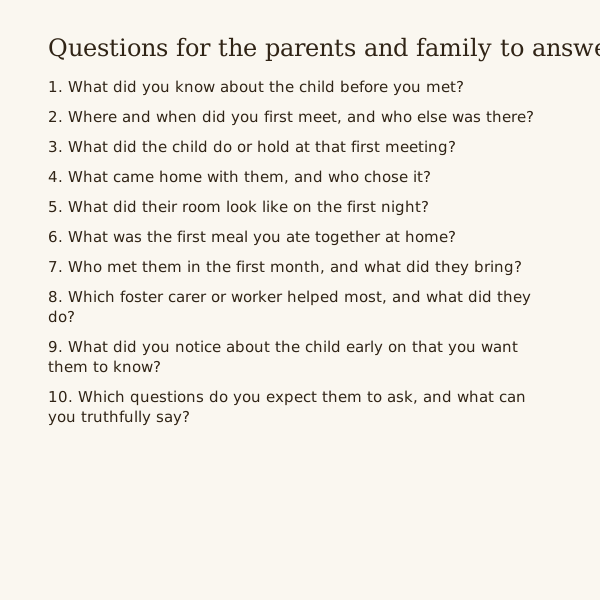
Questions for the parents and family to answer
- What did you know about the child before you met?
- Where and when did you first meet, and who else was there?
- What did the child do or hold at that first meeting?
- What came home with them, and who chose it?
- What did their room look like on the first night?
- What was the first meal you ate together at home?
- Who met them in the first month, and what did they bring?
- Which foster carer or worker helped most, and what did they do?
- What did you notice about the child early on that you want them to know?
- Which questions do you expect them to ask, and what can you truthfully say?
Whose book it is
The JFCS lifebook guide listed below says the book is for the child rather than the adoptive parents. Keep the waiting and the paperwork short and the child in the middle of each page.
Let the child keep it where they can reach it.
Wording for the age the child is now
Use facts and terms agreed for this child, with help from their adoption support worker when needed. Do not withhold or add sensitive history because of a generic age rule.
Use the names the child uses for people. Decisions about sensitive names and history need care specific to the child; keep the source records even when a shared keepsake omits details.
- Read each page aloud to hear whether it suits the child's age.
- Avoid words that blame anyone, including the child.
- Keep earlier page versions separately when correcting facts; add the new source and date.
What stays out of the book
Decide which pages are private and which the child wants to share. Keep source documents securely elsewhere; a school or family keepsake does not need to expose their full history.
Some facts are the child's to share when they choose. A book that goes to school should hold nothing they would mind a classmate reading.
- Keep a full private copy of anything you scan.
- Agree the audience for birth-family details with the child and their support worker as appropriate.
- Check before using photographs of other children from a foster home.
Before, the first day and after
Possible sections are earlier life, people and places, and life since placement. There is no requirement to make coming home the ending or to describe it as a happy resolution.
Gather objects from before if you have them: a foster carer's photographs, a hospital wristband, a toy that came with the child. Photograph anything fragile rather than mounting it.
Pages to make
Where it started
Use a known early photograph or a place the child wants represented. Note the source privately and distinguish an approximate date from a confirmed one.
The day you met
The first photograph together, the date and who was in the room. Add something the child did or held that day if you remember it.
Coming home
The front door, their bedroom on the first night and the first meal, with the child's age then written under them.
Since then
Birthdays, a first school photograph and the people who visit often. Leave room for pages the child makes themselves.
Questions
What should go in an adoption scrapbook?
What is known about the time before, the day you met, coming home and life since. Photographs, a map and objects from before matter more than decoration.
How do I write about birth parents?
Use the child's names for people, supported facts and advice specific to their circumstances. Avoid blame and preserve source records even if a shared page is less detailed.
Should the child see the book?
Let the child choose when to look at it, help make it or put it away. Agree which pages are private and which, if any, they want to show other people.