
Making a memory book with someone living with dementia
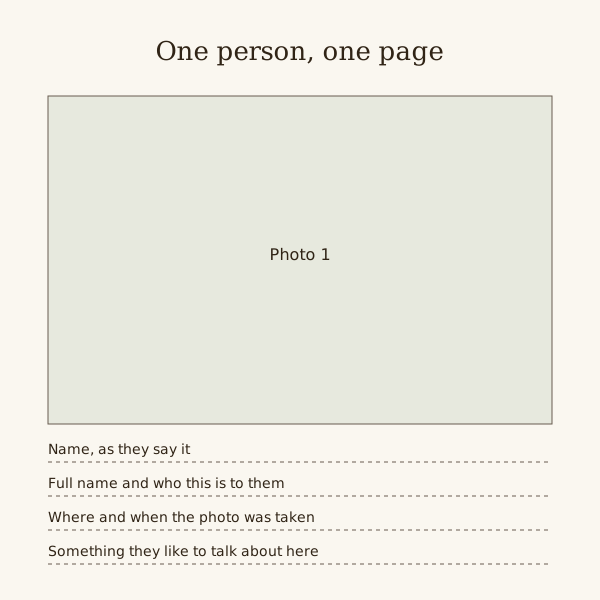
Make it with the person and the people who care for them. Use one large, clear photograph a page, write each name the way they say it, and add a page about their routines and likes for carers.
NHS guidance lists reminiscence work, sharing stories with photos, objects, video and music, as an activity that can be done as a book or on a tablet.
Choose who will read each part of the book. Photographs shared with visitors and personal preferences used by carers may need separate copies or sections.
Make the memory book together
Invite people to send photos and their own words, then choose what goes in the book.
Make it with them
Sit together with a small pile of photographs and let them choose. Write down what they say about a picture in their own words, and leave out any photo they do not want in it.
Short sittings with a few photos each are easier to fit into a day than one long session. Their choice of what goes in counts for more than a complete record.
Offer a page to look at without asking the person to identify anyone. Leave their comments in their own words and accept an unfinished page or a change of mind.
One subject a page
Give each page one person, one place or one object. A collage of small faces is harder to read than a single large photograph with plenty of plain space around it.
Make a sample with one clear photo, a plain background and readable text. Try different sizes with the person and keep the version they prefer; there is no fixed type size for everyone.
- Use dark type on a pale, plain background.
- Put words under the photo, never over it.
- Crop out busy backgrounds so the face fills the frame.
Write names the way they use them
Use the name the person chooses for someone in the photograph. Add a full name or relationship only where it is wanted and useful to the intended readers; avoid testing a recollection.
Include recent photographs of the people who visit now, beside older ones, and date each one.
A section for the people helping
Include preferences only with the person's involvement and for readers who need them. Date the page and name who can update it; this book is not a record of care instructions.
- What they like to be called.
- How they take tea or coffee, and foods they refuse.
- Music, programmes and radio stations they choose.
- Their usual daily routine, as they or their family describe it.
- Subjects they enjoy talking about, and any to avoid.
Keep it safe to carry
The book may travel to a day centre, a hospital or a care home. Leave out addresses, door codes and account details, and keep a second copy or the digital file in case it is lost.
Check the copy again before taking it outside the home. Keep private support information separate from the version shown to visitors, and replace outdated pages rather than writing over them.
Pages to make
Who they are now
The opening page: a recent photograph, the name they like to be called and a sentence in their own words, if they want to give one.
The people who visit
One page for each regular visitor with a current photograph, the name the person uses for them, the full name and relationship, and the day they usually come.
A place from earlier life
A house, workplace or beach they chose, on its own page with the town and the years they knew it. Add a photo of the place today only if they want it.
For the people helping
Two pages at the back listing preferred name, food and drink, music, routine and favourite subjects, written with them and their family and dated.
Questions
What should go in a memory book for someone with dementia?
People, places and things they recognise and like to talk about, one to a page with names written in, plus a few pages on routines and preferences for carers.
Should the photographs be old or recent?
Both. Older photos for places and earlier life, recent ones for the people who visit now, each with a date so carers know which is which.
Can the memory book be digital?
The NHS describes using a book or a tablet for sharing past experiences. Try the format the person prefers and can use comfortably; keep audio and video outside a paper version.