
End of year memory book pupils write themselves
Give each pupil a booklet of eight to twelve pages, one question a page, filled over the last two weeks of term. Add a signature page for classmates and a page the teacher writes.
Adapt each page to the class: pupils can write, draw, select a photo or dictate to an adult. Agree support with the teacher before preparing the booklet.
Try a page in one short session before setting the timetable. Keep spare copies so an absent pupil can contribute later.
Make the memory book together
Invite people to send photos and their own words, then choose what goes in the book.
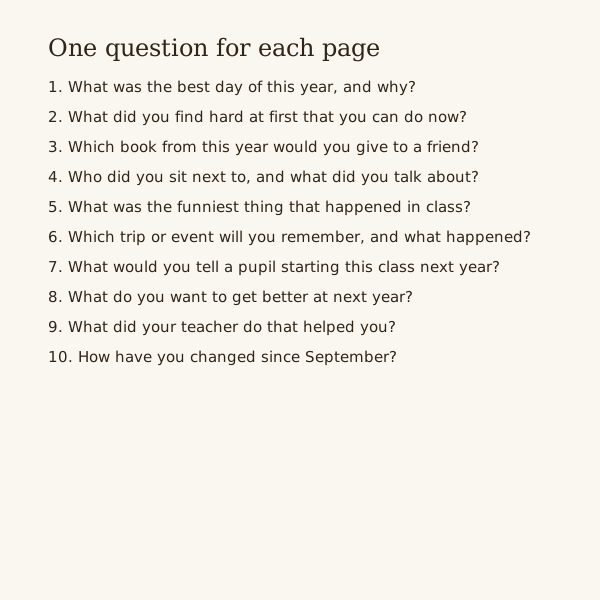
One question for each page
- What was the best day of this year, and why?
- What did you find hard at first that you can do now?
- Which book from this year would you give to a friend?
- Who did you sit next to, and what did you talk about?
- What was the funniest thing that happened in class?
- Which trip or event will you remember, and what happened?
- What would you tell a pupil starting this class next year?
- What do you want to get better at next year?
- What did your teacher do that helped you?
- How have you changed since September?
| Page task | Alternative contribution | Organiser check |
|---|---|---|
| Write about a school day | Draw the event and dictate a description | Keep the pupil's words |
| Choose a class photo | Draw the classroom or use an approved image | Follow the school's image policy |
| Collect signatures | Leave a page for chosen names or drawings | Participation stays optional |
| Finish before term ends | Offer a spare page and a later return | Include absent pupils |
One question to a page
Give each page one question with room for writing or drawing. Use fewer pages if that leaves pupils enough time to choose what they want to keep.
- Cover: name, class, year and a self-portrait
- My class: a class photo or a drawing of the room
- The best day of the year
- Something hard I learned
- Trips and events
- Friends and classmates' signatures
- A letter to myself next year
- From my teacher
Running the signature page
Passing thirty booklets round the room can take a whole lesson. Lay them open on desks and have pupils move round signing each one, with a set time.
Make signing optional. Check names and comments before books go home, using the school's usual approach to pupil work.
The teacher's page
Write a short note per pupil about something specific from their year. Start in the second half of the summer term, keeping a list per child as things happen.
Reserve the same amount of space for each pupil, while keeping the content specific to their year.
Spelling, privacy and class photos
Leave spelling alone on the pupils' own pages. It records where they were that year.
Before adding class photos, check the school's policy. The ICO notes that schools may set their own rules on photography, separate from data protection law.
Pages to make
Cover and class
Self-portrait and name on the cover, then a class photo or a drawing of the classroom with their table marked.
The year in events
Trips, assemblies and sports day, a page each, with a ticket, programme or drawing.
Friends and signatures
A friends page, then the signature page with a name and a line from each classmate.
Teacher and next year
The teacher's note, and the pupil's letter to themselves sealed in an envelope stuck inside the back cover.
Questions
What age is an end of year memory book for?
It can suit different ages when the format changes. Use drawings, dictated answers, photographs or short written responses according to each pupil's needs.
Can pupils make it digitally?
Yes, if the school has devices. Typing loses handwriting, so scan one handwritten page per pupil and include it.
Should the teacher correct mistakes?
Not on the pupils' pages. Correct only the teacher's own page and any printed headings.