
Honeymoon scrapbook: combine two sets of trip photos
Make a honeymoon scrapbook by combining both camera rolls, choosing one account of each day and keeping tickets and small details beside the photographs. Separate it from the wedding-day album.
Start with 40 pages free. No card needed.
Two phones often hold different versions of the same moment. Start with a shared selection folder, then keep the picture that adds most rather than using both automatically.
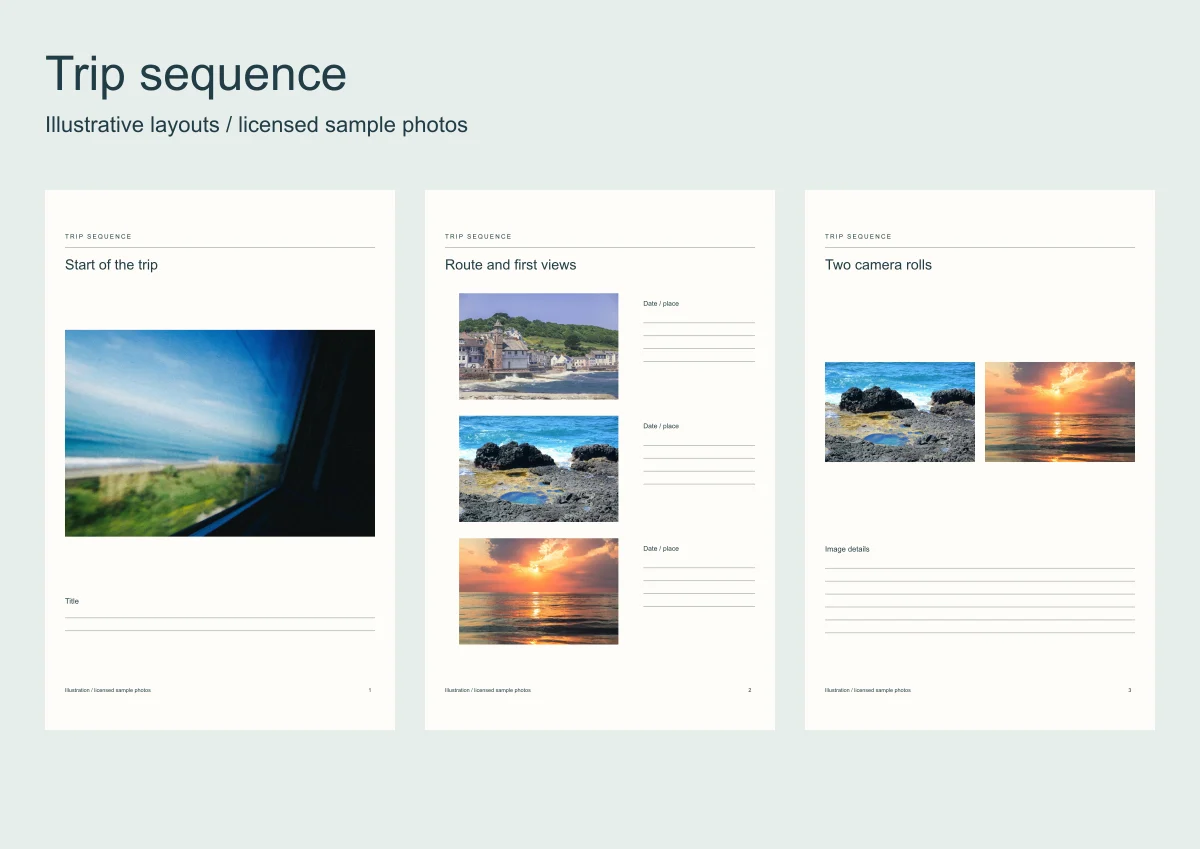
Use the five downloadable layouts to plan the sequence. Their worked coastal example uses licensed sample photos and is not a record of a real honeymoon.
Make a scrapbook
Add your photos and keepsakes, then arrange them on the pages.
| Section | Choose | Check |
|---|---|---|
| Departure | One image that starts the trip | Private booking details hidden |
| First place | Wide view and a useful detail | Correct local date |
| Moving on | Route or travel keepsake | Ticket paired with the right day |
| Shared moment | One main image from either phone | No near-duplicate filler |
| Ending | A distinct closing photograph | Both people agree the sequence |
Download the blank layouts
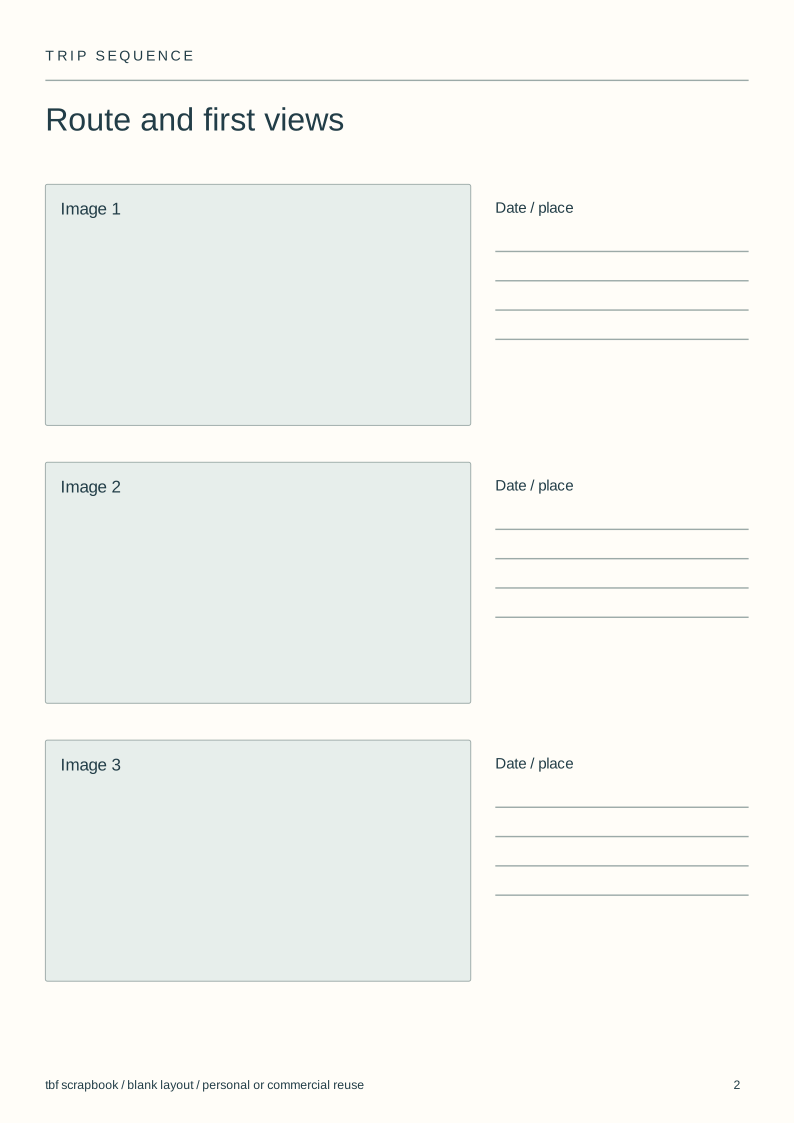
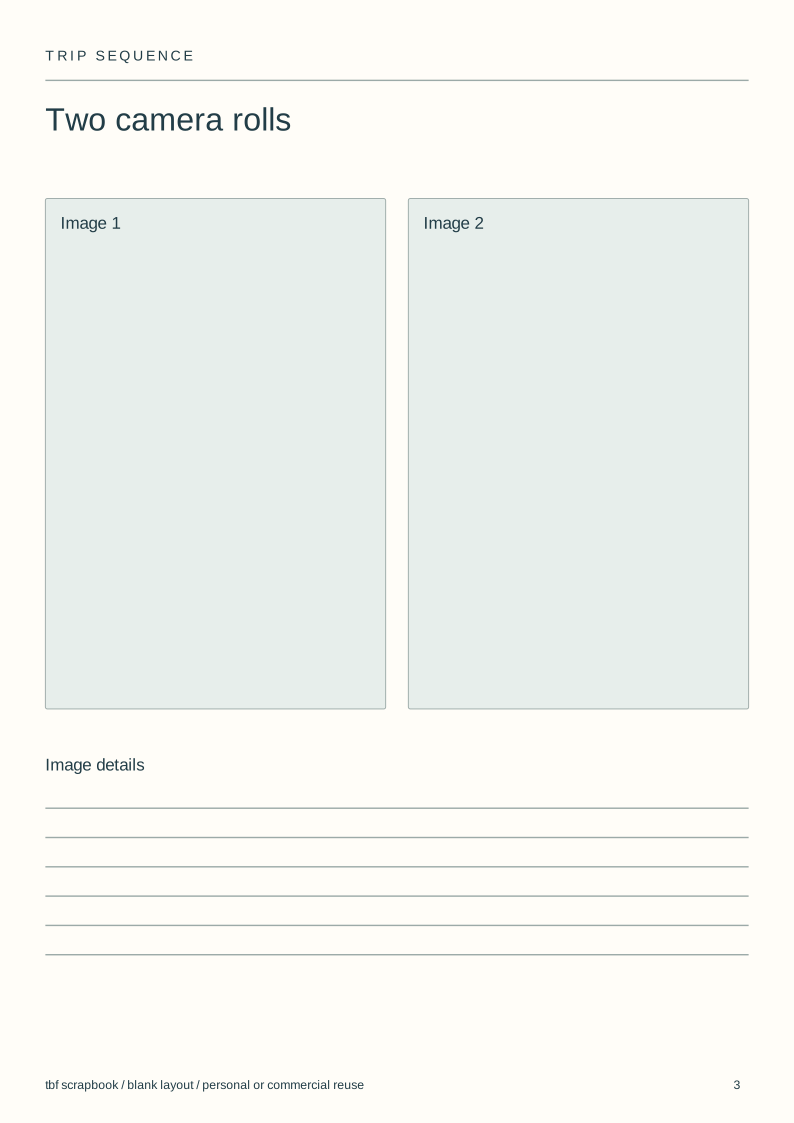
Free original SVG files. Edit a copy in a vector editor or print it. These are separate files, not native tbf book templates or fillable PDFs.
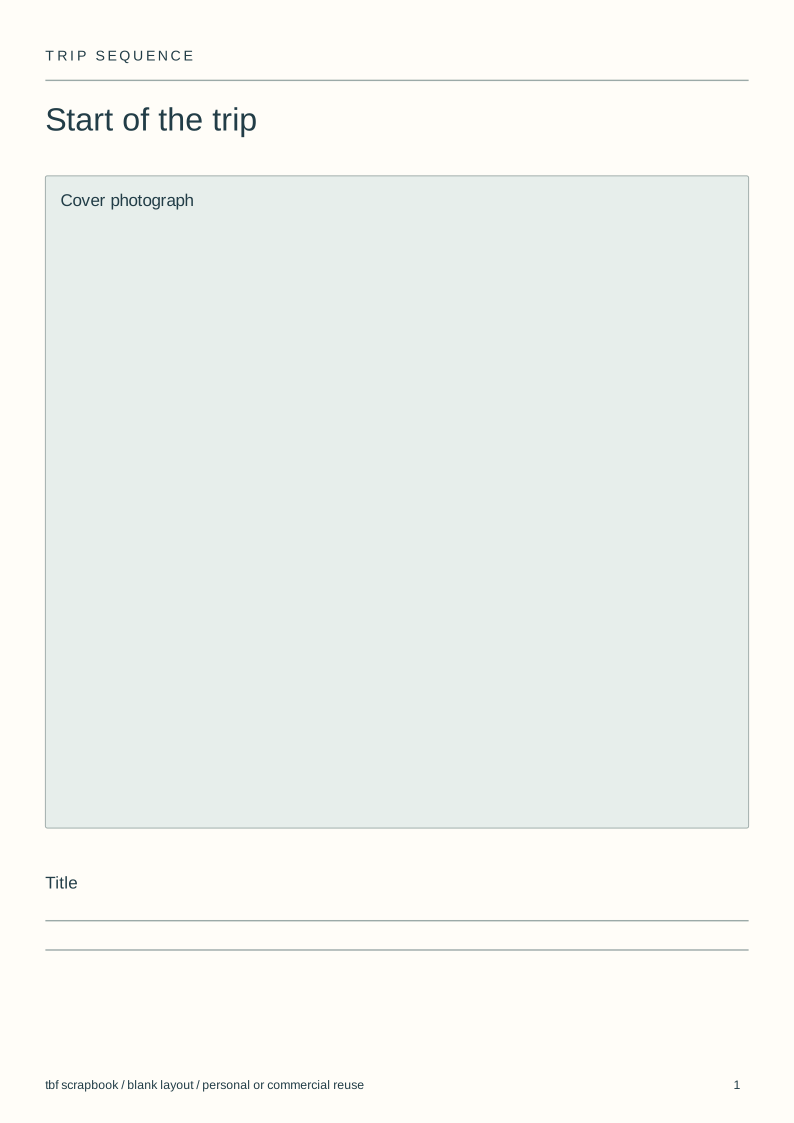
- Start of the trip (SVG)
- Route and first views (SVG)
- Two camera rolls (SVG)
- A quieter day (SVG)
- A different ending (SVG)
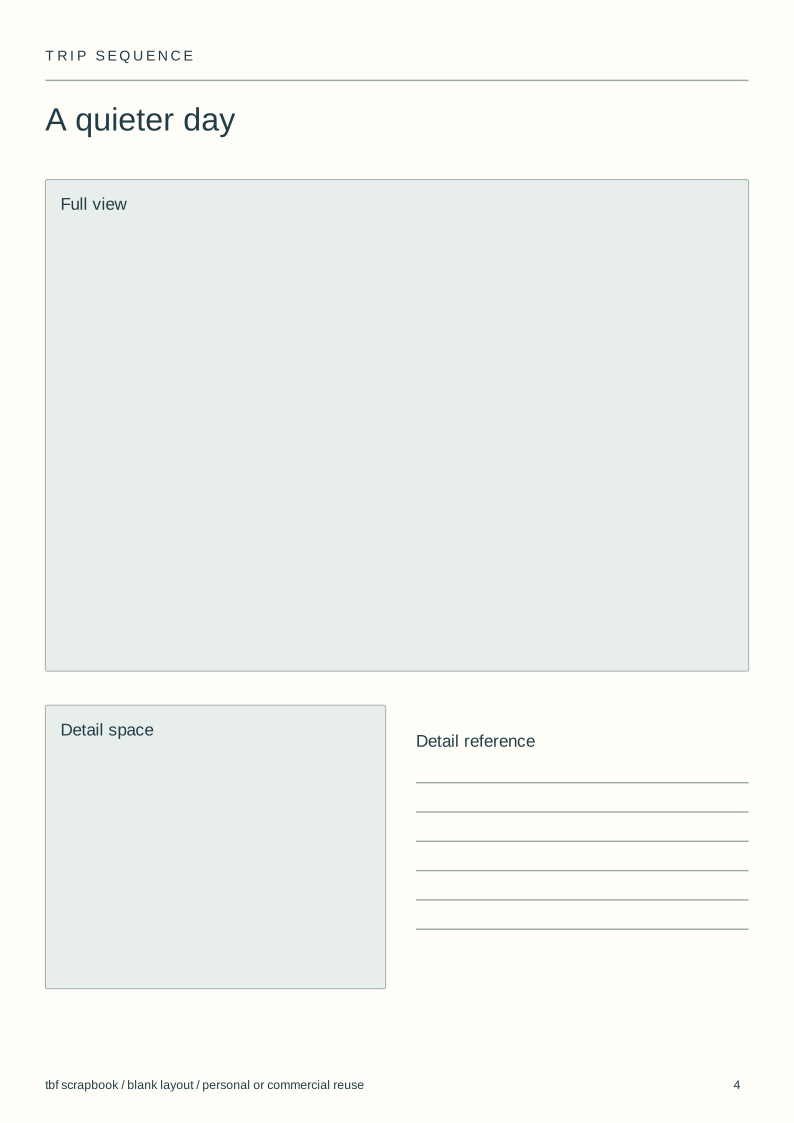
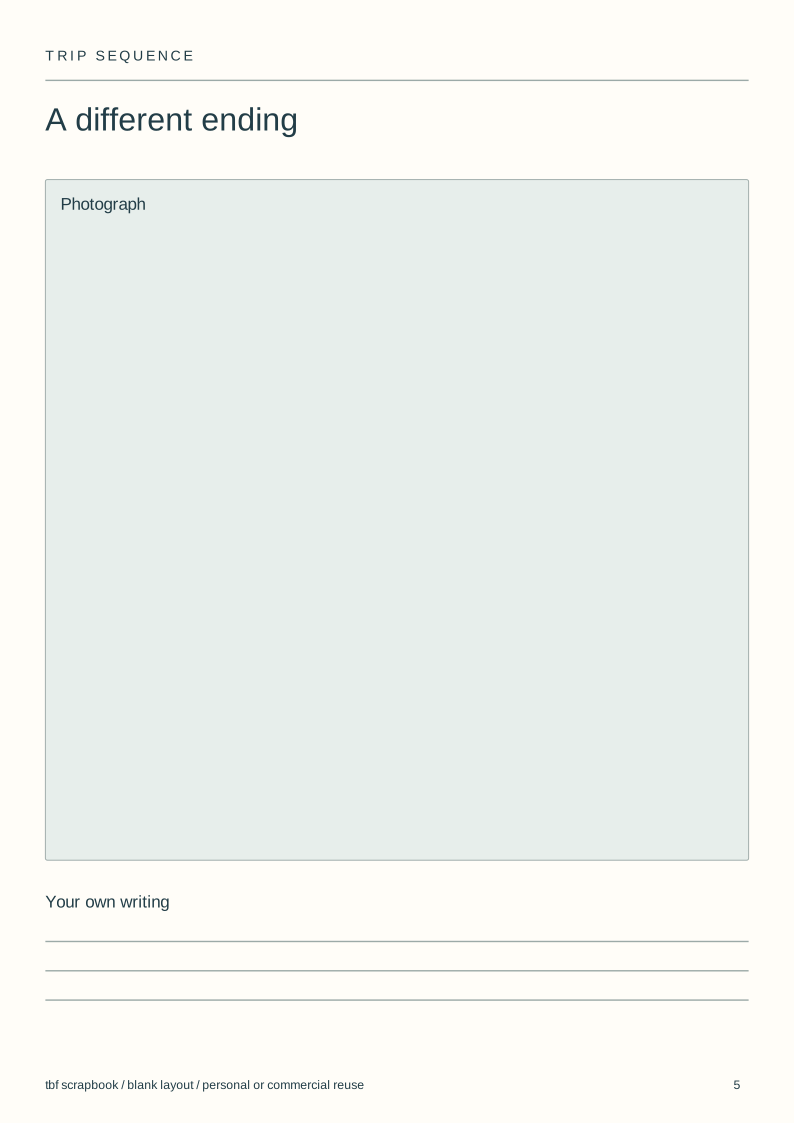
Use and adapt the original blank designs for personal or commercial work, without attribution. Added images keep their own rights. Check a print at actual size before making a batch.
View the complete illustrated layout
Illustrative layouts using licensed sample photographs. These show page structure, not an actual wedding, class, family history or trip. Personal writing stays empty.
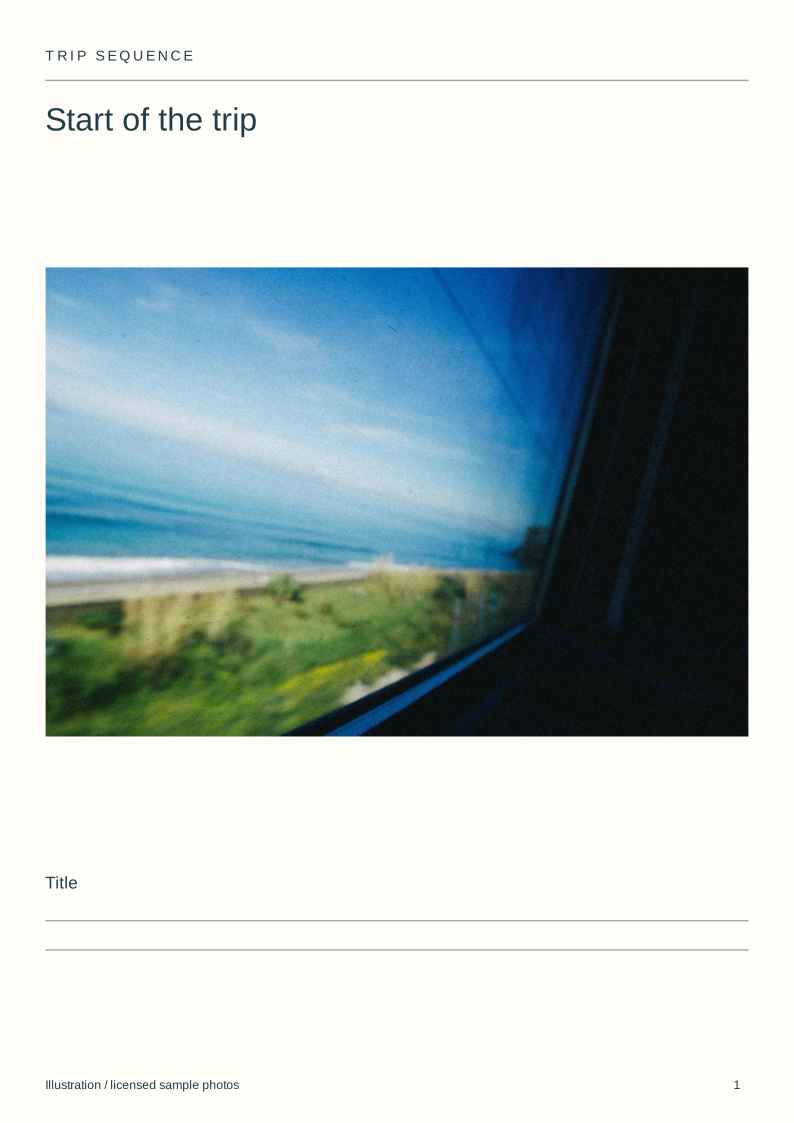
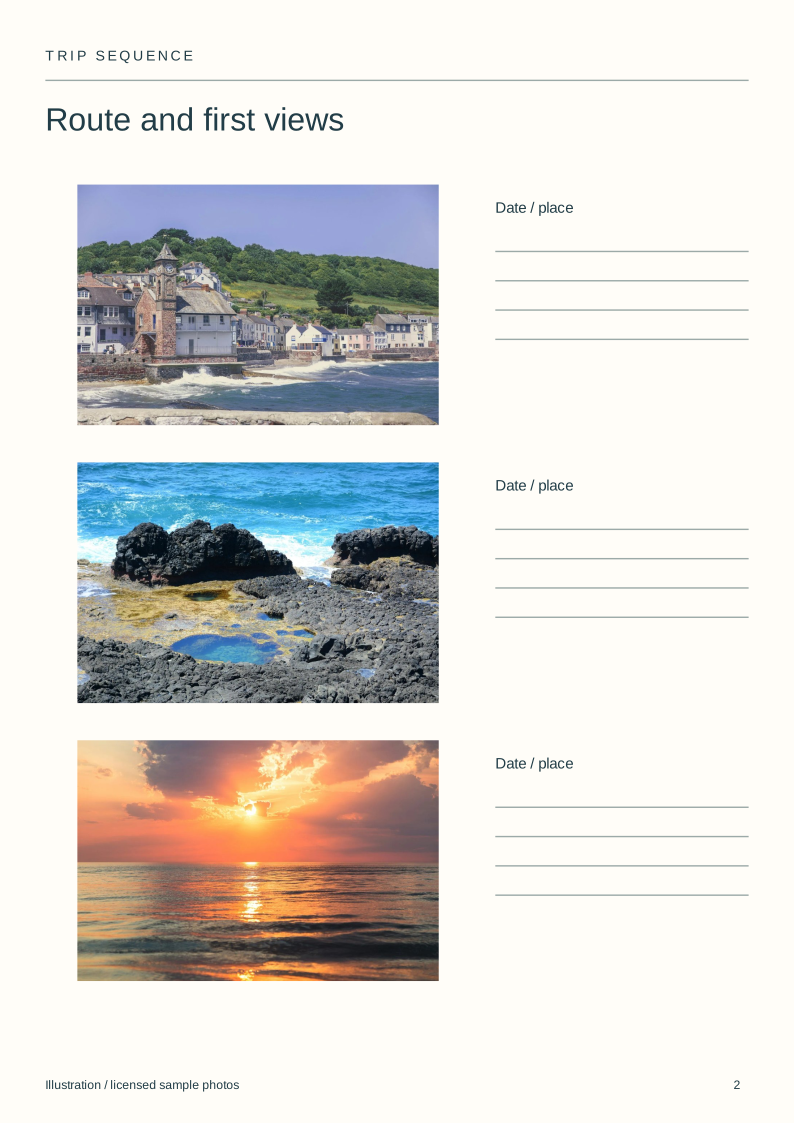
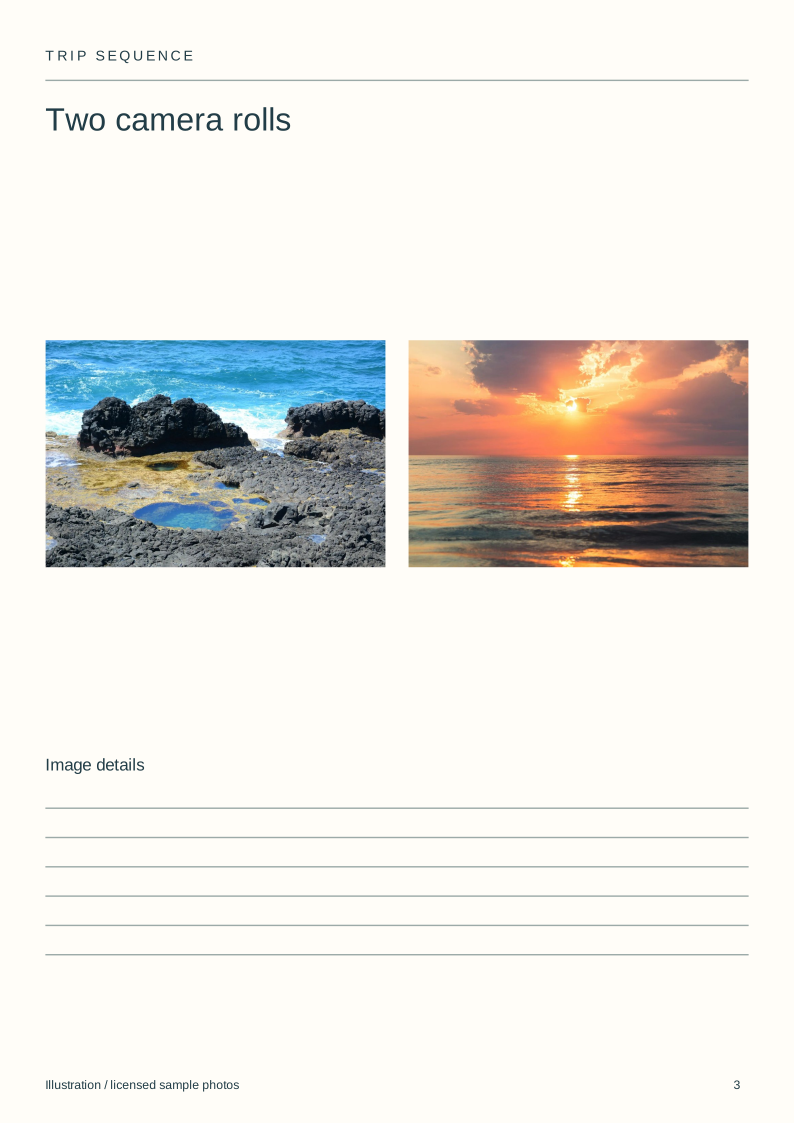
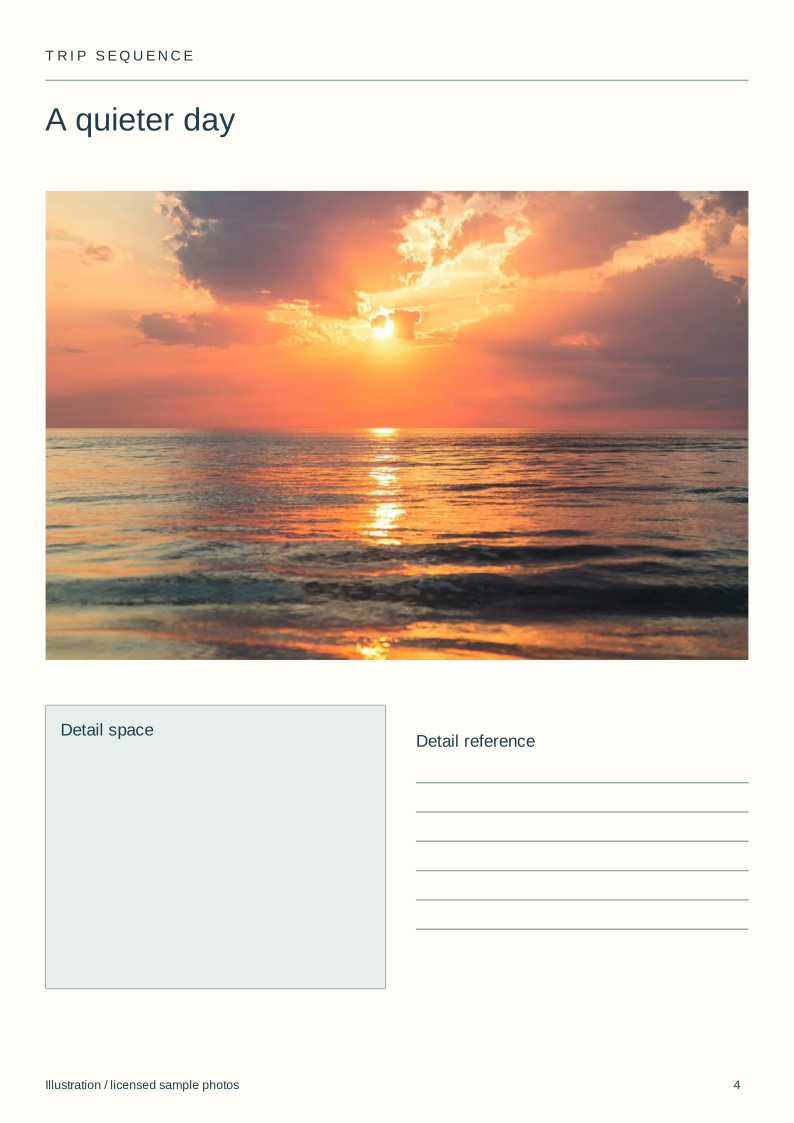
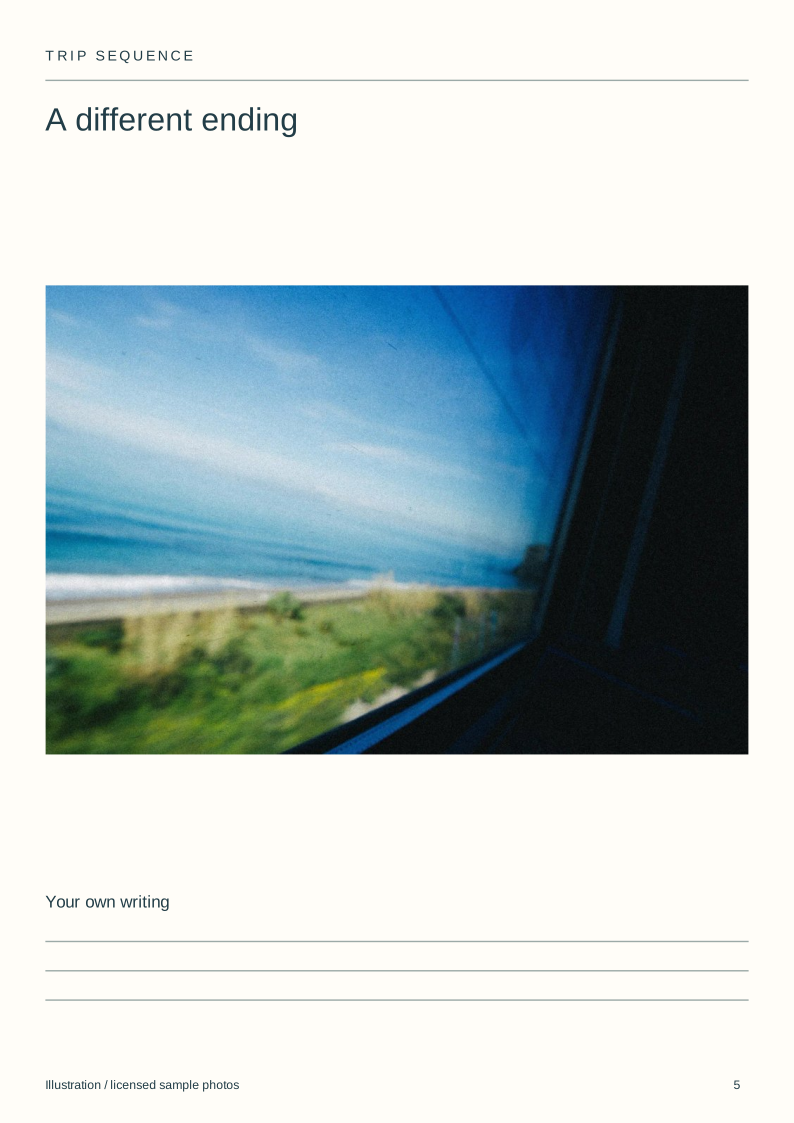
Agree the beginning and end
Decide whether the book starts at departure, arrival or the first full day away. Keep the wedding itself in its own album unless a particular picture explains the transition.
Use a short route list to divide the trip into sections. A move between places is a natural page break, even when the stay lengths differ.
Match dates from both phones
Check whether the phones used the same time zone. Keep the originals and compare a few known moments before relying on automatic date order.
Choose one main photograph when both people captured the same scene. Keep the other only when it shows a different expression, angle or detail.
Give keepsakes a place in the sequence
Photograph both sides of a ticket or postcard when the reverse matters. Put it beside the part of the trip it belongs to, with the relevant date or place.
A meal, a room or a quiet walk can carry a page without a landmark. Each person can add their own account; neither needs a suggested caption.
Finish with a different view
Choose an ending that belongs to the trip rather than repeating the cover. A route overview or a final photograph can close the book without a summary written for you.
Check both people's names, dates and selected material before sharing a reading link. Keep travel booking references out of the public version.
Pages to make
Set the trip boundary
Keep the honeymoon date range separate from wedding-day material.
Compare both camera rolls
Check time zones and choose between near-duplicate photographs.
Pair the keepsakes
Place tickets and maps beside the relevant section.
Review together
Check the completed order and remove private travel details.
Questions
Should the honeymoon go in the wedding album?
It can, but a separate book gives the trip its own route and pace. Keep only the photographs that explain the transition in both books.
How do we combine photos from two phones?
Keep the originals, compare time settings and select files into one working folder. Check known moments before sorting solely by timestamp.
What if one person took nearly all the photographs?
Use the photographs you have. The other person can contribute keepsakes or their own recollections without manufacturing a matching number of pictures.