
How to make a life story book from recorded interviews
Draft a timeline of their homes and jobs, then record one short conversation per period. Type each up in their words, check dates against documents and read it all back to them before it is final.
A life story book made from interviews is their account in their words, arranged by you. The work is mostly listening, typing and checking, with photographs added once the text exists.
Start with a list of where they lived and what they did for a living. It gives every conversation a starting point and shows which years nobody has asked about yet.
Make the memory book together
Invite people to send photos and their own words, then choose what goes in the book.
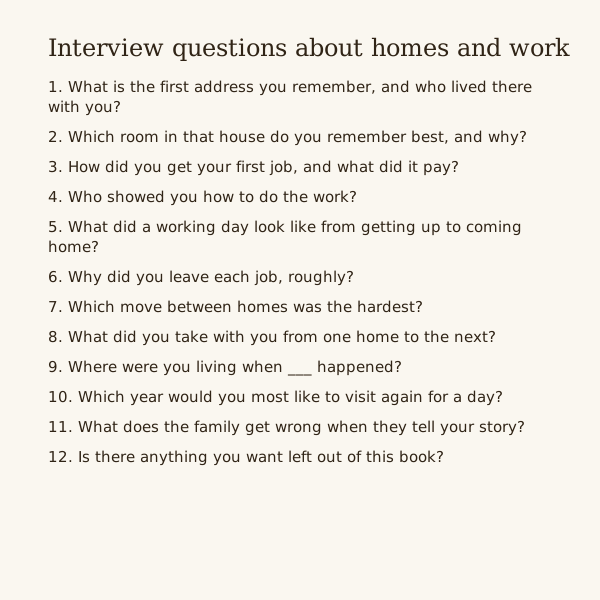
Interview questions about homes and work
- What is the first address you remember, and who lived there with you?
- Which room in that house do you remember best, and why?
- How did you get your first job, and what did it pay?
- Who showed you how to do the work?
- What did a working day look like from getting up to coming home?
- Why did you leave each job, roughly?
- Which move between homes was the hardest?
- What did you take with you from one home to the next?
- Where were you living when ___ happened?
- Which year would you most like to visit again for a day?
- What does the family get wrong when they tell your story?
- Is there anything you want left out of this book?
The timeline of homes and jobs
Make three columns: years, address or town, and job. Fill what you can from family knowledge, old letters and payslips before the first interview, and mark every guess.
Bring the list to the first session and let them correct it. The corrections are often the first stories.
Recording a session
Cover one home or one job per session and agree how long it will last before you start. Put the phone on a folded cloth near them, switch on do not disturb and record a short test first.
Name each file with the date and the subject straight away. A folder of files called Recording 14 is hard to use a month later.
- Ask permission to record each time, not only the first time.
- Bring two or three photographs from that period to look at together.
- Write down names you will need to spell later while they are in the room.
From recording to page
Type up each session within a few days, while you still remember what was pointed at. Keep their phrasing and dialect words; remove repeats and false starts.
Decide early whether the book is in their voice, as I, or in yours, as she or he. Their voice suits a book read by grandchildren; yours suits one that mixes several people's accounts.
Checking the facts with them
Read each typed chapter back aloud and change what they ask you to change. Where a date they gave differs from a document, show them both and let them choose what is printed.
Anything they ask to remove comes out of the book. Agree with them whether the recording of it is kept or deleted.
Pages to make
Draft the timeline
Fill in years, places and jobs from what the family knows and from documents, mark every guess, and bring it to the first session to be corrected.
Record one period at a time
One home or job per session, with two or three photographs from it. Name the file with the date and subject before you leave.
Type it up in their words
Transcribe within a few days. Keep their phrasing, remove repeats, and put square brackets around anything you add to make a sentence clear.
Read it back and agree it
Read each chapter aloud to them, make every change they ask for, and only then add the photographs and lay out the pages.
Questions
How long does a life story book take?
It depends on the timeline. At one home or job per session, a long working life can mean ten sessions or more, and typing up takes longer than recording.
Should a life story book be written as I or as he and she?
As I keeps it in their voice and suits a single narrator. Third person suits a book that combines their account with relatives' memories and documents.
What if they tell me something and later want it removed?
Take it out of the book. Ask whether they want the recording of it kept or deleted, and do what they say.