
Memorial photo book: a life in photos for every household
Gather photos from each household, sort them into chapters by period of life, check every name and date with someone who was there, then make every copy from one final file.
A memorial photo book is often made in the weeks or months after a death, from photos kept in several homes. One person collecting and one person checking captions keeps it consistent.
Choose the people involved and the intended readers first. They may want a private copy, several versions or a wider book; agree any deadline only if one is needed.
Make your photobook
Arrange your photos on A4 pages, check the proof and order a printed copy.
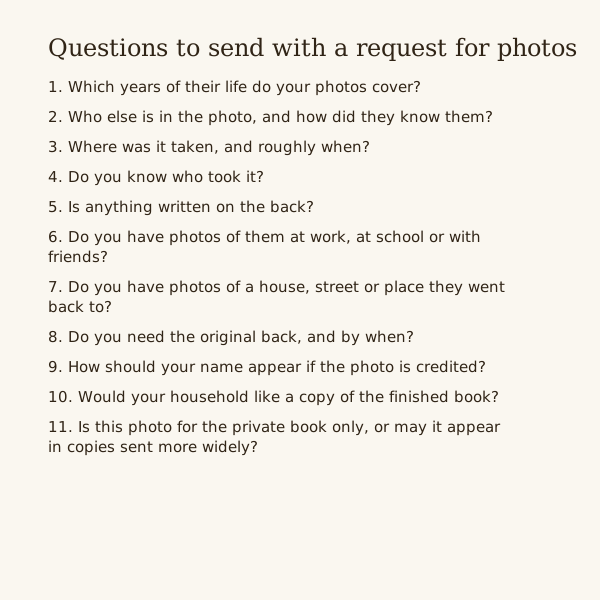
Questions to send with a request for photos
- Which years of their life do your photos cover?
- Who else is in the photo, and how did they know them?
- Where was it taken, and roughly when?
- Do you know who took it?
- Is anything written on the back?
- Do you have photos of them at work, at school or with friends?
- Do you have photos of a house, street or place they went back to?
- Do you need the original back, and by when?
- How should your name appear if the photo is credited?
- Would your household like a copy of the finished book?
- Is this photo for the private book only, or may it appear in copies sent more widely?
Gathering photos from relatives
Write to each household saying what you are looking for: the years you have least of, and photos of the person at work, at school or with friends the family did not know.
Ask for scans or phone photos of prints where people can make them. Where they cannot, borrow the prints, copy them and send them back promptly with a note of what was returned.
Keep a simple log of who sent each photo, what it shows and whether they want the original back.
A chapter for each period of life
Choose chapters from the material and the life you are recording. Places, interests or people can organise the book when a timeline feels too restrictive.
Count the photos in each chapter early. A thin decade is common, and one photo with a short note about the period is better than filling it with unrelated images.
Where people are missing, use places and objects: the house they grew up in, their workplace, a tool they used or a recipe card in their handwriting.
Captions with names and dates checked
Write each caption as plain facts: who, where and roughly when. Mark an uncertain year with 'about' and leave an unknown face blank rather than guessing.
Send the captions for each period to two people who were there before anything is printed. Older relatives may be the only ones who can name faces in early photos.
Spell names the way the person spelt them, include nicknames they used, and agree how married and birth names are shown.
Record disputed dates as approximate, or keep both credited accounts. Check whether private letters, medical details or images of other people belong in the version being shared.
Copies for several households
Settle the final file once and make every copy from it. Changes made to one copy after the event leave households holding different books.
Agree before ordering who receives a copy and how the cost is shared.
A book made in tbf scrapbook can be ordered printed in A4 portrait or A4 landscape after you check its print proof, with the price shown in the editor first. A PDF suits relatives abroad.
Steps
Opening
One portrait the family agrees on, with the full name and the years of birth and death. Nothing else on the spread.
Early years
Childhood photos from the oldest relatives' albums beside a photo of the street or house, with the place and approximate year under each.
Working life
Photos at work or in uniform, a certificate or badge if one survives, and colleagues named only where somebody can confirm them.
Later years
Recent photos with family and friends, one per occasion, ending on a photo the family chooses together for the last page.
Questions
How many photos does a memorial photo book need?
There is no required count. Start with the photos people choose to share and give each chapter the space it needs; an incomplete period can stay brief.
What if part of their life has almost no photos?
Use what exists from that time: a place, a document, an object. A single photo and a short note about the period can stand for it.
Should photos from the funeral go in?
Ask the people making and receiving the book. They can include them, keep them in a separate version or leave them out; no single approach is required.