
Music scrapbook of a life: instruments, bands and records
Follow one person's life in music: first instrument and teacher, the records that mattered, the bands they played in and gigs across the decades. Scan sheet music and photograph instruments.
This book is about a person who plays, sings or listens, not about one night out. Its chapters are decades and bands, with gigs as dated entries inside them.
Talk to the person first if you can. Ask for the story behind each instrument and the names of old bandmates.
Make the memory book together
Invite people to send photos and their own words, then choose what goes in the book.
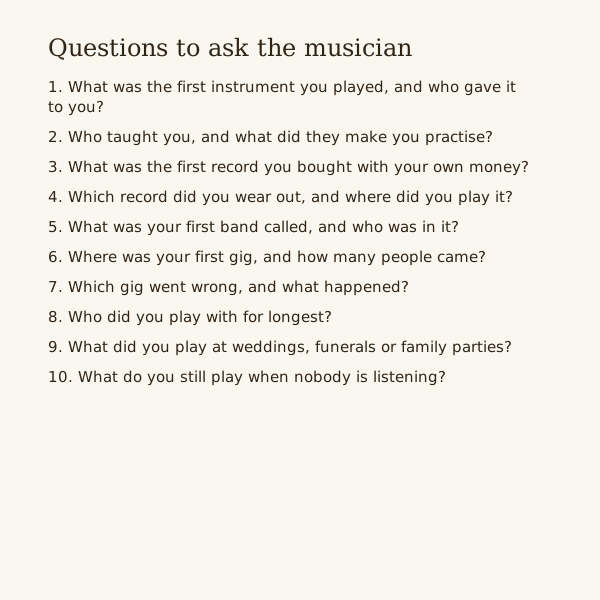
Questions to ask the musician
- What was the first instrument you played, and who gave it to you?
- Who taught you, and what did they make you practise?
- What was the first record you bought with your own money?
- Which record did you wear out, and where did you play it?
- What was your first band called, and who was in it?
- Where was your first gig, and how many people came?
- Which gig went wrong, and what happened?
- Who did you play with for longest?
- What did you play at weddings, funerals or family parties?
- What do you still play when nobody is listening?
| Role | Material to gather | Page structure |
|---|---|---|
| Player or singer | Instrument, rehearsal notes and named group photos | Practice, line-up, performance, later years |
| Listener or collector | Own collection photos, purchase notes and memories | First records, listening places, changing tastes |
| Band member | Dated flyers, set lists and contributions | One section per line-up |
| Family performer | Photos and agreed recordings from gatherings | One event per page with names and dates |
Instruments as objects
An instrument will not fit on a page but photographs well. Shoot it whole, then the worn patches, case labels and stickers, which date it better than memory does.
Ask when and where it was bought or given, and whether it is the one in the old photographs. Keep any serial number in your notes rather than on the page.
Lessons, exams and sheet music
Use a rehearsal note, certificate or music page you have permission to reproduce. Keep handwritten marks readable and record the piece and year beside it.
- Scan at a setting that keeps faint pencil readable.
- Keep each teacher's name and the years they taught.
- Note the piece played at an exam or a first performance.
Bands, line-ups and gigs played
Bands change members. Write the line-up and years on each band's first page, with each person's instrument, so later photographs make sense.
Flyers, set lists and posters are often undated. Date them from the venue, the line-up or an old diary rather than guessing.
- Ask former bandmates for the photographs they took.
- Keep a set list with the photograph from the same night.
- Leave a blank where nobody can confirm a name.
Records, tapes and recordings
Photograph record sleeves and cassette inlays, especially any with handwriting. The first record bought and the most played each deserve a page.
A recording of the person playing cannot go on paper. A digital book can hold an audio clip; for a printed one, note where the recording is kept.
For each recording, keep a file list: title or set, performers, date, venue, source file and who agreed to its use. Test a copy rather than relying on a link alone.
Pages to make
First instrument
The instrument as it is now, a photograph of them playing it young, the teacher's name and years, and a scanned page of early sheet music.
A band
A line-up photograph with names and instruments, a gig flyer and a set list, with the band's years across the top.
Records that mattered
Three sleeves photographed flat, each with the year it was bought and where. Add the room or the player it was played on if a photograph exists.
Playing now
A recent photograph with the instrument, the place they play today, and a recording embedded or its location noted.
Questions
How is a music scrapbook different from a concert scrapbook?
A concert book follows shows you watched. A music scrapbook follows one person across years: instruments, teachers, bands and the gigs they played.
What if there are few photographs of them playing?
Use the instruments, sleeves, flyers and set lists as the images, and ask former bandmates and friends who came to gigs for their photographs.
How do I record a song without copying lyrics?
Use its title, artist and the date or setting that matters to you. Write your own account alongside a photo or set list, and keep any original recordings separately.