
National parks scrapbook: a page for every park you visit
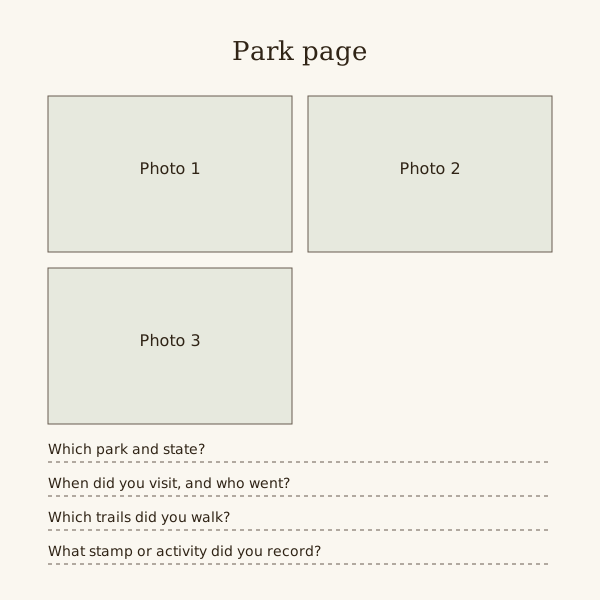
Give each park its own page or spread: a map crop with your route, the passport stamp, trails walked and two or three photos. Keep a visit log so dates and trail names stay accurate.
Many people reach parks over several years and on different trips. A set of park pages copes with that better than one trip told in date order.
Decide early whether the book counts every National Park Service site or only the national parks themselves. That choice sets how many pages you will need.
This guide is independent of the National Park Service.
Make the memory book together
Invite people to send photos and their own words, then choose what goes in the book.
| Record | Where to check it | Why keep it |
|---|---|---|
| Park and site name | Park's own website or visitor map | Distinguishes similarly named sites |
| Actual visit date | Photo timestamps and travel notes | Separate from a later stamp |
| Trail and route | Map or trailhead photograph | Shows what you actually walked |
| Stamp and activity | Card, badge photo or booklet | Records what was collected |
| Page number | Your finished book | Makes repeat visits easy to find |
Collect stamps without spoiling a page
A passport cancellation is a rubber ink stamp with the park's name and the date of the visit. Eastern National, which runs the Passport programme, says cancellations are free to collect.
Stamp a plain card or the passport book rather than a finished page. Ink can smudge or bleed, and a card can be moved if the layout changes.
Record the actual visit date separately if the stamp date differs. A closed visitor centre or missing stamp need not leave a gap in the account of your trip.
- Carry a few blank index cards in a zip folder for stamps.
- Let the ink dry before the card goes back in the folder.
- For a missed stamp, the Passport programme sells stickers in the cancellation style; a line in your visit log also works.
Junior Ranger badges and booklets
NPS describes Junior Ranger activities, a pledge and a badge, with directions set by each park. People of all ages can participate; many parks provide badges only in person.
A badge is too thick for most page protectors. Photograph it flat on a plain background for the page, and keep the badges together in a small box.
Scan two or three pages of the finished booklet. The child's own answers say more on the page than the booklet's cover does.
Maps and trails
Park maps are folded and printed on both sides. Cut up a spare copy, or photograph only the area you walked and mark your route by hand.
Trail distances vary between apps, signs and books. Take the figure from the park's own map or trailhead sign, and write it in your log on the day.
- Mark the trailhead and turning point, not every bend.
- Add height gained only if you recorded it.
- Keep the whole map folded in a pocket at the back of the book.
A visit log at the back
One sheet listing park, state, dates, who went and whether you got a stamp becomes the index for the book.
Order the park pages alphabetically, by region or by first visit. Alphabetical suits a long-term aim of reaching many parks; first visit suits a family record.
Pages to make
Park overview
Left page: a map crop with your route marked and the visit dates. Right page: one wide landscape photo, with the stamp card held in photo corners.
Trails walked
A strip of three photos in trail order, from trailhead to viewpoint, with the trail name and the distance from the park's map written underneath.
Ranger activities
The photographed Junior Ranger badge beside a picture from a ranger talk, with a scan of one answered booklet page.
A return visit
Add a page straight after the park's first one instead of starting a new section. Put the same viewpoint from both years side by side if you have it.
Questions
What if a park had no stamp or I missed it?
The Passport programme sells retro cancellation stickers for missed stamps. A dated entry in your own log is enough for the book.
How do I fit a big park map on a 12 by 12 page?
Use only the part you visited. Scan or photograph that section, print it at page width and mark your route, then keep the full map in a pocket.
Which photos work best on each park page?
One wide view to set the place, one close detail such as a trail sign or a plant, and one with the people who went. Three different kinds read better than many similar views.