
Paper bag scrapbook: turning lunch bags into a book
Fold three clean flat-bottomed paper bags in half and alternate their open ends. Bind the fold, then test each opening with a scrap tag before covering the pages.
A flat-bottomed paper bag can become a small book with pockets at the open ends. Check its folds first: the bottom flap does not always form a usable pocket.
Three bags make a slim book that is quick to finish. Four or five make a fatter one, but the fold gets harder to sew and to close.
Make a digital scrapbook
Add your photos and keepsakes in tbf scrapbook, then arrange them on the pages.
Set the bags up before folding
Lay the bags flat with the bottom flaps facing up. Turn the middle bag end to end so open ends and bottoms alternate down the stack.
Square the edges, then fold the whole stack in half so the two ends meet. Run a bone folder hard along the fold before binding.
Bind along the fold
For a stitched version, clamp the folded stack and pierce three evenly spaced holes. Test on spare bags; stop if the paper tears around a hole.
A long-arm stapler may hold a thin stack. Ribbon through punched holes is another option; test the bag paper for tearing before filling the book.
For a cover, wrap a sheet of card slightly larger than the folded bags round the outside and bind it in with the bags.
Two kinds of pocket
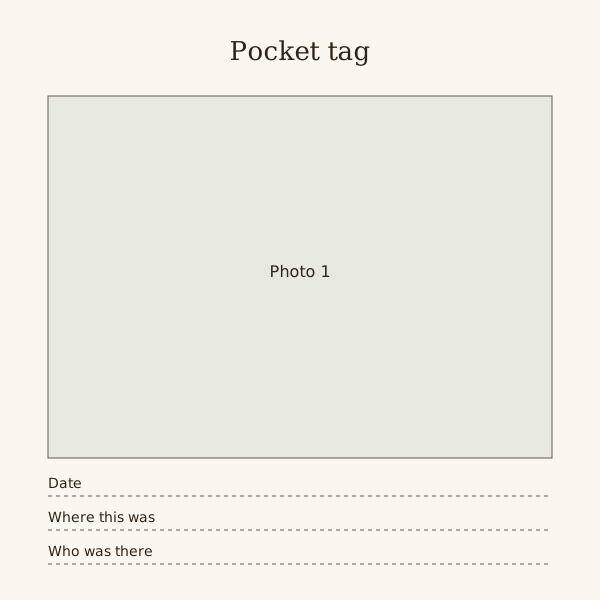
The open end takes tags slid in from the page edge. Cut tags a little narrower than the bag and taller than the pocket, so the top shows and can be pulled.
Check under the bottom flap before treating it as a pocket. If it is sealed, make a separate pocket from card rather than prising apart the bag seams.
- Tags with a photo on one side and notes on the back.
- Ticket stubs and wristbands.
- A folded map or programme.
- A seed packet or a recipe card.
- A handwritten note from someone who was there.
Stiffen the pages
Bag paper is thin and creases easily. Glue card or patterned paper to each page face, cut 5 mm smaller all round, so photos sit on a firm base.
Leave the pocket mouths free of glue and of any covering panel. A panel glued across an opening turns the pocket into a sealed tube.
Use copies for a bag-paper book
Lunch bags have no guaranteed archival specification. Keep irreplaceable prints and letters separately and put copies in this folded craft book. Start with unused bags without grease or food residue.
Steps
First page and the first pocket
A photo of the place on the first page, with the travel tickets slid into the open end behind it.
A spread of tags
Three tags in one pocket, each with a photo on the front and the date and place on the back.
Under the flap
Try a copied map under a bottom flap only if that bag's seams form a usable pocket. Otherwise, put the map in an open-end pocket and keep the flap as a page.
The back pages
Receipts, a wristband or a postcard in the last pocket, and a small photo of everyone on the back cover.
Questions
How many bags make a paper bag scrapbook?
Three folded bags give twelve page faces including the outside covers. Pocket counts depend on the bag seams; test each opening before adding decorative panels.
Can I use bags other than lunch bags?
Try a clean flat-bottomed bag that folds without cracking. Remove handles and test the fold, seams and binding with a spare before making a full stack.
Do I have to sew a paper bag book?
No. Staples or ribbon can suit a thin test stack. Choose the method that lets your actual bags turn without tearing, rather than assuming sewing is strongest.