
Photo book for grandparents: photos, names and readable pages
Choose photos with the grandparents, then add names, dates and everyday scenes they would like to see again. Collect from each participating household and test a page at its finished size.
Ask whether they want a recent family update, familiar favourites or a mixture. A picture already seen on a phone may still be the one they want in a book.
Invite photos from the households taking part. Agree which names, ages and images may appear, especially if the book will also be shared online.
Make the memory book together
Invite people to send photos and their own words, then choose what goes in the book.
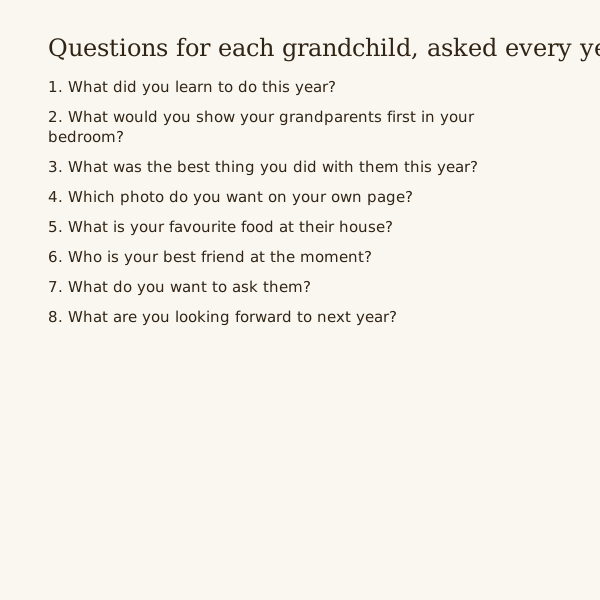
Questions for each grandchild, asked every year
- What did you learn to do this year?
- What would you show your grandparents first in your bedroom?
- What was the best thing you did with them this year?
- Which photo do you want on your own page?
- What is your favourite food at their house?
- Who is your best friend at the moment?
- What do you want to ask them?
- What are you looking forward to next year?
Mix familiar favourites with everyday scenes
Choose a favourite portrait alongside an everyday scene: a puzzle, a meal, a walk or a visit. Repeated poses can make room for pictures that show different activities.
Include anything they asked about on the phone: the new bike, the school play, the lost tooth.
Captions large enough to read
Sensory Trust's clear print guidance gives 12 point as the minimum and 14 point as the ideal, including captions. It says RNIB defines large print as 16 point or more.
Use a plain sans serif font in dark type on a pale background. The same guidance says not to place text over images, so put captions on plain space beside or below.
Print one proof at the intended page size, without fit-to-page shrinking. Ask the reader to check names, captions and group faces before making the rest.
- First name, age, place and month under every photo
- Full names on group photos, left to right
- The year in large type at the top of each spread
Fair pages across cousins
Check that every participating child or relative has the space they want. A drawing, handwritten page or photo of something they made can be included without adding a portrait.
Group by household, date or activity. A contributor may prefer not to appear; leave their space out rather than treating equal page counts as a rule.
Making it a yearly book
A book each Christmas or birthday turns into a shelf of volumes that show the grandchildren growing. Keep the same size and cover so they sit together.
Ask the grandchildren the same few questions each year and print their answers with their age. Side by side across volumes, the answers show each child changing.
Pages to make
The grandchildren together
One photo of all the cousins, with every name printed left to right underneath and their ages, on a spread of its own at the front.
Each grandchild's pages
A large portrait, two everyday photos the grandparents have not seen and the child's answers to this year's questions, with their age.
Time with the grandparents
Photos from visits that show the grandparents with the children, which they cannot take themselves.
Made by the grandchildren
A drawing or piece of homework from each child, photographed flat, with their name and the date written beside it.
Questions
What should go in a photo book for grandparents?
Photos of the grandchildren they have not seen, names and ages under each, pictures of the grandparents with the children, and something each child made.
How big should the captions be?
Sensory Trust recommends at least 12pt Arial-equivalent for clear print, ideally 14pt. Test the finished page with the reader and increase the size if needed.
How is this different from a grandparents memory book?
A memory book collects the grandparents' own past. This book is a gift of the present: the grandchildren now, made by the family for the grandparents to look at.