
Travel photo book: cut a trip's photos to one story
Cut the trip's photos hard, decide whether the book runs by day or by place, and write down names and places while you are still away. A holiday photo book works the same way.
A two-week trip can leave a couple of thousand photos across two phones and a camera. At two or three photos a page, a 40-page book has room for 80 to 120 of them.
So the work is mostly choosing. Layout comes after the cut, and captions come from notes made on the trip rather than from memory months later.
UK readers may know this as a holiday photo book. The method is the same.
Make your photobook
Arrange your photos on A4 pages, check the proof and order a printed copy.
Gather every camera into one folder first
Copy the photos from each phone and camera into one folder for the book, leaving the originals where they are.
Check the clocks. A camera left on home time sorts hours away from phone photos of the same moment. Find one scene both captured, work out the difference and correct it before sorting.
Then sort the folder by the time each photo was taken. Every later choice starts from that order.
Cut in three passes
Each pass asks one question, so you are not judging the best view while still deleting duplicates.
- Pass one: exclude blurred frames, pocket shots and near-identical bursts from the book selection; keep the camera originals separately.
- Pass two: mark the scenes that distinguish each stop, including the people and ordinary details as well as landmarks.
- Pass three: for each day or place, keep the photos that show something no other photo shows.
- Stop when the count matches the book: its pages times two or three, plus a few spares.
By day or by place
Order by day when the trip moved: a rail route, a road trip, a walk between towns. The book then follows the trip in the order you lived it.
Order by place when you stayed put or went back to the same spots. Five days at one beach read better as the beach, the town, the food and the day trips than as five similar days.
A trip with several bases can do both: a chapter for each base, and the days in order inside it.
Maps, tickets and signs
Use a route map once, as an opening spread, rather than a small map on every page. Draw it, trace it, or photograph a paper map with the route marked in pen.
Scan tickets and wristbands flat, at the size of the photos beside them. Crop out names and booking references before anyone else sees the book.
A photo of a station sign, a ferry timetable or a menu often names a place more clearly than a caption.
Keep a route list with stop, arrival date, departure date and photo folder. Match caption spellings to signs or your booking records, then remove booking codes from the shared book.
Write captions while you are still there
Names of villages, dishes and the people who helped you are the first details to go. Write them each evening, a few lines a day, while the photos are still on the phone.
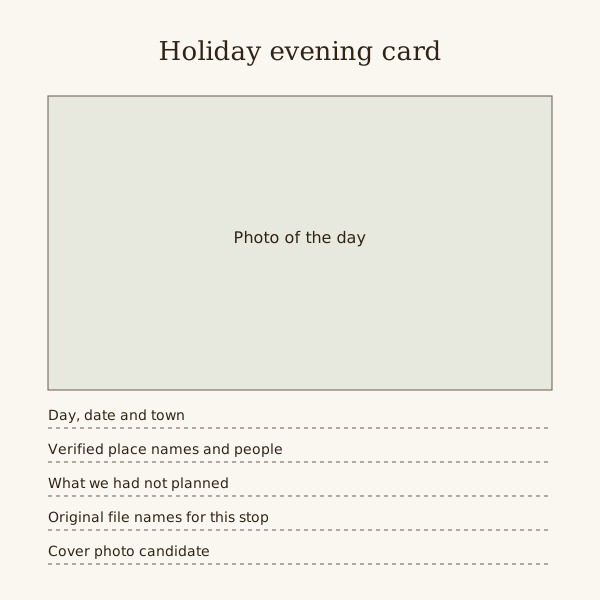
Print the card below and fill one each evening, or keep the same five lines in a note. Write down the numbers of photos you already know are keepers.
Steps
Opening: the route
The route map across the left page, and on the right the first photo of arriving: the airport exit, the harbour wall or the station sign.
A full day
One large photo of the day's main place, three small ones beneath it in time order, and a scanned ticket from that place in the corner.
The day nothing went to plan
Give the rained-off afternoon or the wrong turn a spread of its own: one photo, plenty of space, and the town and date from your evening card.
An index of places
End with a list of every place in the book, with its dates and page numbers, beside one photo of everyone who went.
Questions
How many photos should a travel photo book have?
Count the pages first. At two or three photos a page, a 40-page book holds 80 to 120, which for most trips means cutting hard.
Should a holiday photo book have captions?
Short ones: place, date and any names. Save longer writing for the few pages where something happened that the photo does not show.
What if two of us photographed the same things?
Keep the better frame of each scene, whoever took it. Correct any camera clock first so the merged folder sorts in the order things happened.