
Vision board scrapbook: a page per goal, kept for a year
Instead of one poster, give each goal its own spread: cuttings of what you picture on the left, the right page left blank. Return on set dates and fill it with what actually happened.
A poster vision board shows the start of a year and nothing after. A scrapbook version keeps the picture and the record side by side, so in December you can see what changed and what you dropped.
Choose who can see the book and any digital copies. A closed cover does not set access permissions for photographs or files you share.
Make a digital scrapbook
Add your photos and keepsakes in tbf scrapbook, then arrange them on the pages.
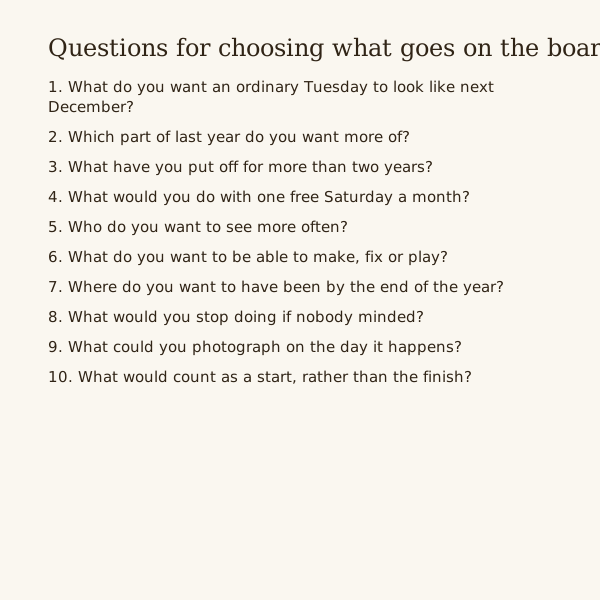
Questions for choosing what goes on the board
- What do you want an ordinary Tuesday to look like next December?
- Which part of last year do you want more of?
- What have you put off for more than two years?
- What would you do with one free Saturday a month?
- Who do you want to see more often?
- What do you want to be able to make, fix or play?
- Where do you want to have been by the end of the year?
- What would you stop doing if nobody minded?
- What could you photograph on the day it happens?
- What would count as a start, rather than the finish?
| Field | What to record | Review question |
|---|---|---|
| Starting point | Dated photo or your current situation | What has changed since this? |
| Next action | One practical step you choose | Is this still the next useful step? |
| Materials or time | What you will need before starting | What is available now? |
| Evidence | Photo, ticket, note or completed work | What actually happened? |
| Decision | Continue, change, pause or drop it | What do you want to do next? |
Start with an overview spread
The first spread is the board itself: one small image for each goal, arranged on a single page, with the year as the title. The facing page lists the goals in your own words.
Choose a few goals you want to revisit, then allocate one spread each. Start with fewer if you have little material; add a spread when a new goal becomes specific.
One spread for each goal
Put the cuttings, photos and words that describe the goal on the left page. Leave the right page blank except for a heading and the date you started it.
Pick images of what a normal day would look like with the goal in it, rather than the end result. A pair of muddy boots says more about walking weekly than a mountain summit.
Cuttings that make sense later
Write on the back of each cutting where it came from and why you kept it. In a year, a magazine photo of a kitchen means nothing unless you know what it stood for.
Mix your own photos in with cuttings. A photo of the actual bike in the actual shed is a better marker than a stock picture of somebody else's.
Go back on fixed dates
Pencil four review dates on the overview page, such as the last Sunday of March, June, September and December.
At each review, add tickets, photos and a dated line to the right-hand pages. When a goal no longer fits, strike it through and write why, rather than tearing the page out.
Use the right page to record evidence, the next practical action and anything outside your control. Keeping pictures in a book does not make a result certain.
Steps
The board spread
Glue one 5 cm square image per goal in a loose grid on the left page. List the goals on the right page with the date you wrote them.
A goal: learning to cook
Left page: a cutting of a full table and a photo of your own cooker. Right page: the date, then one line and a photo for each new dish as it happens.
A goal: seeing friends more
Left page: an old photo of the group and a train ticket. Right page: a ticket stub or a photo from each meet-up, each with its date.
The December spread
Copy the board's images small down the left page. Beside each, note what happened, what stalled and whether it carries into next year's book.
Questions
What do you put in a vision board scrapbook?
Cuttings and photos of what each goal would look like day to day, your own list of goals, and later the tickets, photos and notes from what happened.
How many goals should a vision board have?
Use as many as you can give a useful spread and return to. Four to six is one possible starting layout, rather than a rule or a promise of results.
What if a goal changes halfway through the year?
Strike it through, date it, write why, and start a new spread behind it. The change is part of the record.