
Coffee table photo book: one subject, fewer bigger photos
Choose one subject and test the book as a visitor might browse it: open any spread, recognise its subject and read the details you need. Use fewer large photos where the files support them.
A coffee table book is picked up for a few minutes at a time, often opened somewhere in the middle. That changes the rules: fewer photos, larger, and almost no words on the pages.
This is a personal book made from your own photos, not a published art book. The test is whether a visitor can enjoy a spread without anyone explaining it.
Make your photobook
Arrange your photos on A4 pages, check the proof and order a printed copy.
Pick a subject with edges
One subject stops the book becoming a year's camera roll. It needs enough strong photos to fill the pages at one or two a page.
- A place: a garden through four seasons, or a house before it was sold.
- A year, told only through its best 40 or 50 photos.
- A person, from early prints to recent photos.
- A walk, swim or view you have photographed over many years.
- A city or stretch of coast you keep going back to.
Fewer photos, larger
Count images from your actual spread plan. For example, 19 interior spreads with one photo each use 19 photos, before any opening or closing single pages.
A full A4 landscape page at 300 ppi is 3508 by 2480 pixels. An uncropped 12 MP photo, 4032 by 3024, fills one with a little to spare. Keep softer shots small.
A photo across both pages needs a panorama shape. An ordinary photo stretched over a landscape spread loses roughly half its height to the crop.
Sequence for browsing
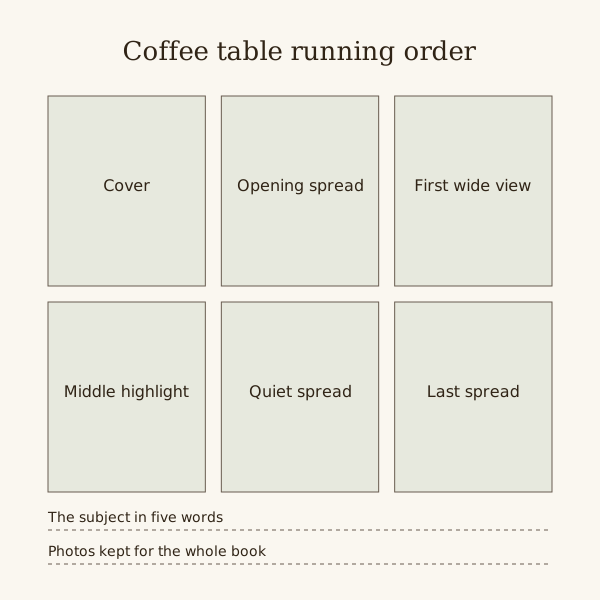
Lay small prints of every spread on the floor in order and walk along them. You are looking for repeats and dull runs, not for a story only you can follow.
- Place strong photos through the middle as well as at the start.
- Pair facing photos by colour, shape or line, so each spread reads as one picture.
- Follow a wide view with a close one, and a crowded page with an empty one.
- Never put two near-identical photos on facing pages.
- End on a photo that looks finished: an evening, an empty chair, a closed gate.
Choose captions or an index
Keep brief identifying captions where readers need them. If labels interrupt the photographs, put a page-numbered index at the back and leave a visible reference on each spread.
Ask someone unfamiliar with the subject to open three spreads at random. Note every place they need an explanation, then supply the missing names or context in your own words.
Steps
Title and first photo
Title and dates alone on the left page. On the right, the photo that states the subject at once, such as the house seen from the gate.
A pair that rhymes
Two photos taken years apart from the same spot, one on each page at the same size, with nothing else on the spread.
A panorama spread
One wide photo across both pages, cropped so no face or doorway sits in the fold. Use this once or twice in the book, not throughout.
The index
If using an index, list page, place, date and names in readable type. Open the book at a random spread and check that its entry can be found without guessing.
Questions
How many pages should a coffee table photo book have?
Sketch the spreads and count their pages. Giving each photo more space can increase the page count. Check the printer's minimum without adding weak images merely to reach it.
How is it different from an ordinary photo book?
Fewer, larger photos, one subject, and little text on the pages. An ordinary photo book often records everything from an event; this one is edited for people who were not there.
Can I use phone photos in a large book?
Yes, if each one holds up at its printed size. Print the planned crop on ordinary paper at full size and look at faces and fine detail before deciding.