
Collaborative family reunion scrapbook: a book from everyone
Make a collaborative family reunion scrapbook with a page from each household. Plan the collection, identify old photos and add pictures from the gathering.
Start with 40 pages free. No card needed.
A family reunion scrapbook records one gathering and the people who took part. A collaborative version includes pages from each household, including relatives who could not attend.
Begin the collection before the reunion, then finish after the event. Older photographs give the gathering context; new pictures show who was there and what happened.
One organiser keeps the book together. Guests can send material through a tbf scrapbook contribution link without an account, or make a private page the owner has reserved for review.
See also: roles in a collaborative scrapbook, a family book across households, collecting the family recipes.
Start the reunion book before the gathering
Reserve a place for each household, collect older photographs and leave room for the reunion itself. Make a family reunion memory book online.
Start with 40 pages free. No card needed. Plans and prices.
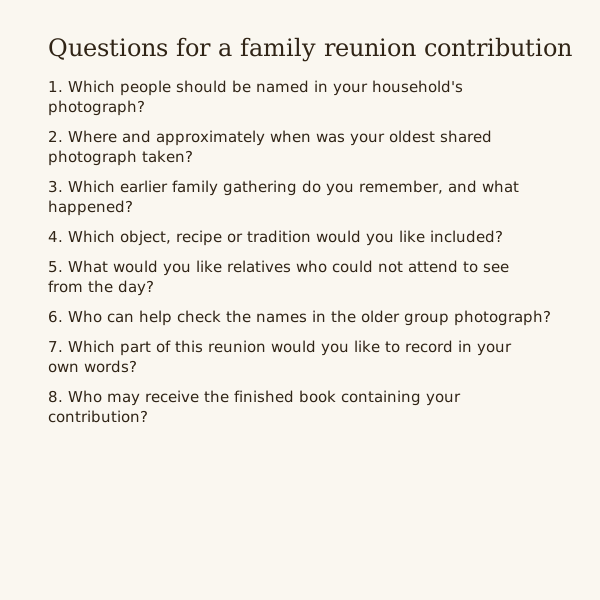
Questions for a family reunion contribution
- Which people should be named in your household's photograph?
- Where and approximately when was your oldest shared photograph taken?
- Which earlier family gathering do you remember, and what happened?
- Which object, recipe or tradition would you like included?
- What would you like relatives who could not attend to see from the day?
- Who can help check the names in the older group photograph?
- Which part of this reunion would you like to record in your own words?
- Who may receive the finished book containing your contribution?
| Pages | What goes there | Who supplies it |
|---|---|---|
| 1 to 2 | The reunion name, date, place and a short contents page | Organiser |
| 3 to 14 | Two pages each for six households | A lead from each household |
| 15 to 18 | Older gatherings and identified family photographs | Relatives who hold the originals |
| 19 to 22 | Pictures and memories from this reunion | Guests after the event |
| 23 to 24 | Absent relatives' contributions and a closing photograph | Organiser with the contributors |
Reserve space by household before the gathering
Count the households and choose a space allowance. The 24-page example gives six households a spread each, with room left for shared photographs and material from the reunion itself.
Adapt the allocation to the people involved. A relative attending alone can have a page of their own; someone unable to travel can contribute before the day.
Collect older photographs with a source note
Ask who holds each original, who supplied the copy and whether the date is certain. Capture the back of the print if names or dates are written there.
Keep an uncropped copy and check the names with more than one relative where possible. Record conflicting recollections as uncertain rather than choosing one because it fits the page.
Give the reunion collection a named helper
Choose someone who can explain the paper or digital collection and keep the finished sheets. Test the contribution link before the gathering on a phone away from the venue Wi-Fi.
Keep a paper option for guests who prefer it. Photograph complete pages later, with the writer's chosen name, and check the result before arranging them.
Finish after the photographs from the day arrive
Set the closing date after the gathering so guests can choose their pictures. Ask for the people's names and the part of the day, not an unlabelled export of every phone photo.
Select one version of repeated group shots and use the spare space for smaller conversations, shared meals and people who are missing from the formal picture.
Agree which relatives receive the finished edition
Ask contributors about the intended audience before passing the reading link beyond the reunion group. Keep addresses, phone numbers and the invitation register outside the book.
Have a second relative check the full book, including absent family members' names. For physical copies, inspect the proof, confirm how many households want one and check delivery at ordering.
Pages to make
Invite household leads
Choose one contact for each household, agree the space allowance and record who can identify the older pictures.
Collect the first pages
Ask for an identified photograph and each contributor's own memory. Reserve private pages where relatives want to make their own layout.
Add the reunion itself
Keep space for the gathering. After the event, collect named pictures and choose the ones that show different people and moments.
Check and distribute
Confirm names and sharing choices with the group. Send the reading edition and arrange any paid downloads or printed copies.
Questions
What should go in a family reunion scrapbook?
Include household pages, identified older photos, pictures from the reunion and contributions from absent relatives. Keep a date and place with each gathering.
Can relatives make their own reunion scrapbook pages?
Yes. In tbf scrapbook the owner can reserve private pages or spreads. Relatives submit their work for review before the owner adds it to the shared book.
Should I print the reunion book before the event?
Print beforehand if it is an existing-history gift. To include photographs from the reunion itself, finish after the event and check the proof before ordering.