
Group scrapbook: how several people make one book
One person owns the book and arranges the pages; everyone else contributes material by a fixed date. Agree who decides, what to send and the deadline before anyone starts.
Group scrapbooks stall for the same few reasons: nobody owns the decisions, the deadline is vague, and five people arrange pages in five styles.
Separating contributing from arranging solves most of it. Many people send; one or two put the pages together.
Make a digital scrapbook
Add your photos and keepsakes in tbf scrapbook, then arrange them on the pages.
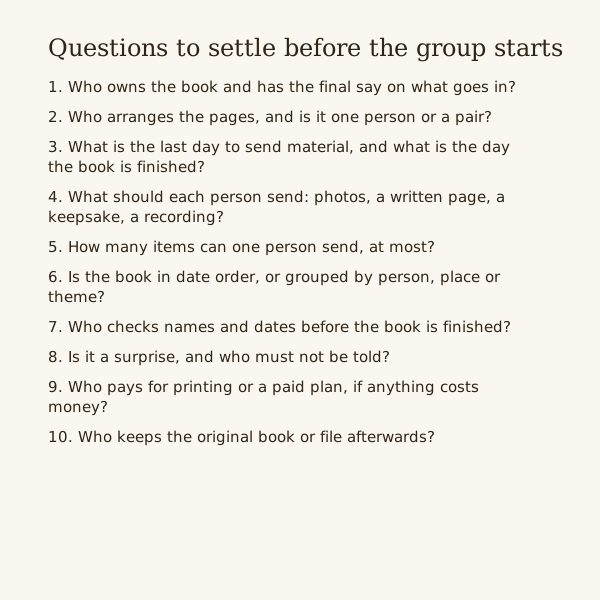
Questions to settle before the group starts
- Who owns the book and has the final say on what goes in?
- Who arranges the pages, and is it one person or a pair?
- What is the last day to send material, and what is the day the book is finished?
- What should each person send: photos, a written page, a keepsake, a recording?
- How many items can one person send, at most?
- Is the book in date order, or grouped by person, place or theme?
- Who checks names and dates before the book is finished?
- Is it a surprise, and who must not be told?
- Who pays for printing or a paid plan, if anything costs money?
- Who keeps the original book or file afterwards?
One owner, a small number of arrangers
The owner settles disagreements and holds the final copy. Pick the person who will still care about the book in a month, not the keenest on day one.
Arranging is best done by one person, or two who agree a page style first. More hands on the layout means pages that no longer look like one book.
Contributors and editors are different jobs
A contributor sends material. An editor moves things on the pages. Most people in a group only need to be contributors.
tbf scrapbook keeps the two apart: contributors send photos, words, audio and video, the owner reviews them, and paid plans allow five editors including the owner.
Paper books passed round the group
A paper book can travel from house to house, each person filling their own spread. Set a number of days per person and a fixed order of names.
Photograph each spread as it comes back. If the book is lost in the post, the pages already made still exist.
- Write the order of names inside the front cover.
- Put the date each person must pass it on beside their name.
- Send glue, pens and spare photo corners with the book.
Deadlines that hold
Give two dates: when material is due and when the book is done. Leave at least a week between them for material that arrives late.
State the weekday, full date and time zone if needed. Agree what happens to material that arrives after the deadline, such as holding it for a later edition.
Track consent beside the materials
Keep a list with contributor name, item received, audience agreed and page checked. If someone withdraws an item before completion, remove it from the layout and the shared review copy.
Steps
Agree the roles
Name the owner and the arranger in the first message, and answer the question list above together before collecting anything.
Collect to one place
Ask everyone to send material to the owner, or to one shared folder or book, labelled with their name. Paper goes in one box or envelope.
Arrange in one style
The arranger builds two sample pages and shares them. Once the group agrees on the look, the rest of the pages follow the same pattern.
Check and close
A second person reads every page for names and dates. The owner exports or photographs the finished book and shares the copy with the group.
Questions
How do you make a scrapbook with a group?
Agree an owner and an arranger, set a deadline, collect everyone's material to one place, and let the arranger build the pages in one style.
Should everyone get their own page in a group scrapbook?
One page per contributor gives a predictable space allowance. Grouping by event can suit shared occasions; agree the structure and space limit before collecting.
What if two people disagree about a photo?
The owner decides, which is why the owner is named first. Leave a photo out if someone in it asks, whoever sent it.