
Memory jar ideas: what to write and what to do after
Choose a year jar for dated notes, an occasion jar for contributions, or a display jar for small keepsakes. Keep a pen and slips nearby, then decide who reads them and where they go afterwards.
Memory jars can hold written memories, small keepsakes, or both. Choose the contents before decorating: a jar of shells needs a different opening and storage plan from a jar of folded slips.
Unlike a time capsule, nothing is sealed. The jar is opened on a known day, the slips are read, and the useful work is keeping them afterwards.
Make a digital scrapbook
Add your photos and keepsakes in tbf scrapbook, then arrange them on the pages.
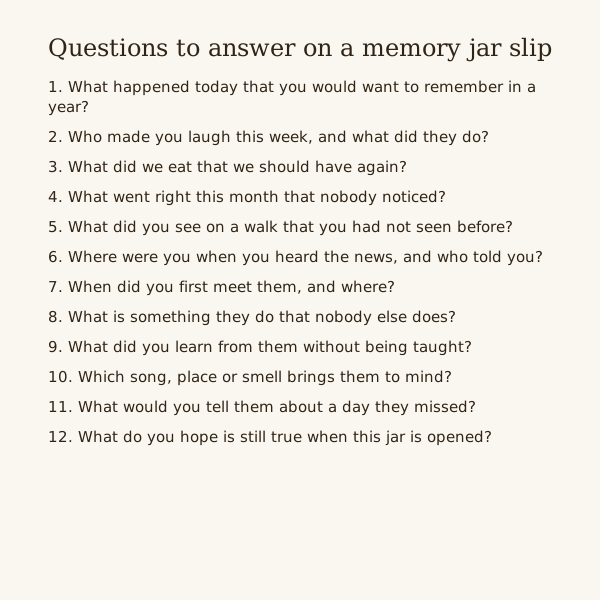
Questions to answer on a memory jar slip
- What happened today that you would want to remember in a year?
- Who made you laugh this week, and what did they do?
- What did we eat that we should have again?
- What went right this month that nobody noticed?
- What did you see on a walk that you had not seen before?
- Where were you when you heard the news, and who told you?
- When did you first meet them, and where?
- What is something they do that nobody else does?
- What did you learn from them without being taught?
- Which song, place or smell brings them to mind?
- What would you tell them about a day they missed?
- What do you hope is still true when this jar is opened?
| Type | Put inside | Plan before filling |
|---|---|---|
| Year jar | Dated slips about specific days | Opening date and a place for the notes afterwards |
| Occasion jar | Contributors' own memories | Recipient and whether reading aloud is agreed |
| Trip display jar | Copies of tickets and a few clean keepsakes | A label with place and travel dates |
| Mixed jar | Notes plus small objects | A separate envelope for slips that could snag |
A year jar or an occasion jar
A year jar sits in the kitchen from January and is read on New Year's Eve. It works when the slips and pen live beside it and one moment in the week, such as Sunday tea, is when people add one.
For a leaving day, birthday or funeral, offer a question card beside the slips. Let contributors decide whether to sign, and tell them who will receive or read the jar.
Cut and test a slip before making a stack
Cut a sheet of A4 printer paper into a four by four grid. Each slip is about 52 by 74 mm, big enough for three or four lines and small enough to fold twice.
Write and fold a test slip with the pen you plan to use. Check that it stays readable and does not transfer ink to the next slip.
- Use a wide-necked jar so a hand can reach the bottom.
- Colour-code slips by person in a year jar, if names matter later.
- Keep a spare stack of slips in a drawer for when the jar runs low.
People who cannot reach the jar
For an occasion jar, someone always lives too far away. Ask them to post a slip in an envelope, or collect their words and photos online and print them for the jar.
In tbf scrapbook, invited people send photos and words from wherever they live, and the owner chooses what goes in.
Reading the slips, then keeping them
Agree who opens the jar and whether anything will be read aloud. A funeral or gift jar can go straight to its recipient to open privately.
Press the slips flat under books for a few days. Mount them in a book with photo corners or tuck them into envelope pockets, a month or a writer per page.
Steps
Set up the jar
Choose the jar, cut a hundred slips, and put the jar, slips and a pen in the room where people already gather.
Print the questions
Print the question card below and stand it against the jar. Change the card halfway through a year jar so slips do not repeat.
Open on the day
Tip the slips out, unfold them, and sort by date or by writer. Read them aloud, or let the person the jar is for read alone first.
Mount and store
Flatten the slips, mount them in a book or scan them in order, and store the originals together in a labelled envelope.
Questions
What do you write in a memory jar?
A specific moment: what happened, who was there and when. Answering one printed question gives a fuller slip than a blank sheet.
How do you use a memory jar at a funeral?
Leave the jar, slips, pens and a question card on a table with a sign. Let people write without a name if they prefer, and give the jar to the family afterwards.
What do you do with the slips after reading them?
Flatten them and keep them in a book, a page per month or per writer. Scan them first if you want copies for more than one person.