
15 elementary yearbook themes, with cover ideas
Pick a theme a five-year-old can draw and that splits into one part per grade. The 15 here include a garden, building blocks, a jigsaw and a passport, each with a cover and dividers.
A paid plan is required to create a yearbook. Printing is a separate order.
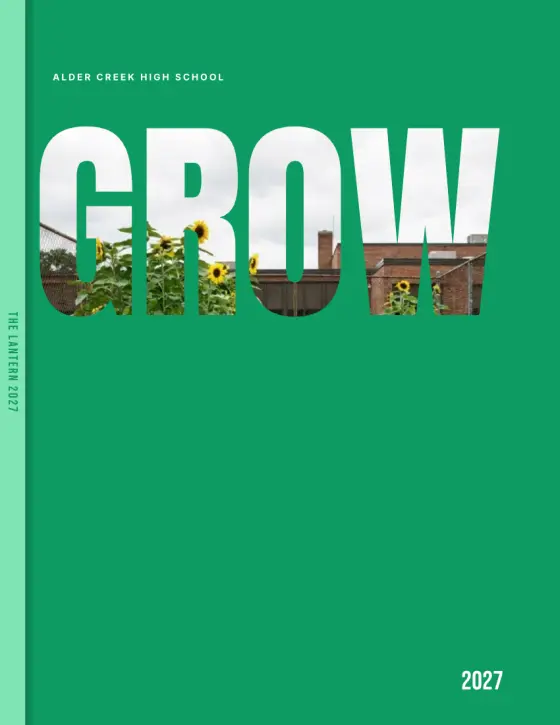
An elementary theme has to work for a child who cannot read yet and for a fifth grader who feels too old for it. Concrete objects manage both; slogans manage neither.
Each of the 15 themes below comes with a cover idea and a divider plan. They are grouped as places to visit, things you make, and things that grow or change.
See also: Lay out the grade dividers, Use pupil art on the endsheets, Plan a book for under-fives.
Start a yearbook
Choose a style, a page count and space for each student. Start the yearbook online.
A paid plan is required to create a yearbook. Printing is a separate order. Plans and prices.
15 elementary yearbook themes with cover and divider ideas
Places to visit (1 to 5)
- 1. Under the sea. Cover: one painted paper fish per pupil. Dividers: shore, reef, open water and deep sea.
- 2. Space. Cover: the school as a rocket on dark blue. Dividers: one planet per grade, nearest the sun first.
- 3. A museum. Cover: framed pupil self-portraits on a gallery wall. Dividers: a numbered room sign per section.
- 4. A zoo of mascots. Cover: each class draws its own animal. Dividers: that animal's footprints lead into its pages.
- 5. A passport. Cover: a plain passport with the school crest. Dividers: an inked stamp and a date for each grade.
Things you make (6 to 10)
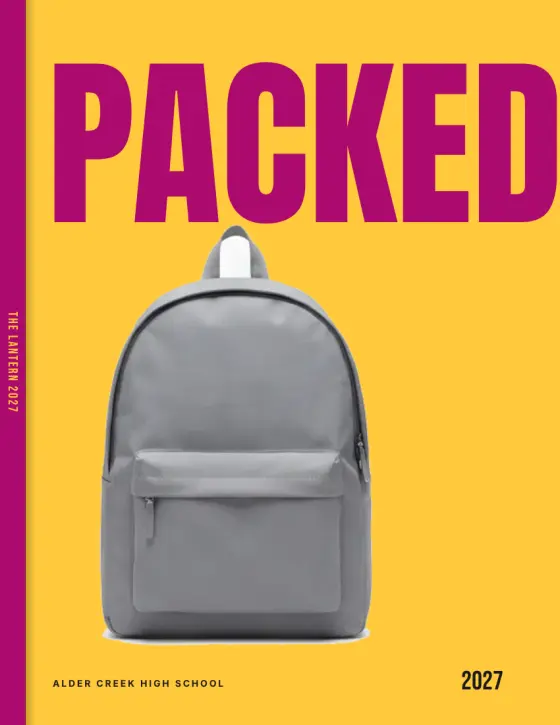
- 6. Building blocks. Cover: the school name built from toy bricks. Dividers: the stack gains one block per section.
- 7. A jigsaw. Cover: class photos cut as pieces, one piece out. Dividers: a piece each; the closing shows it whole.
- 8. A toolbox. Cover: an open box of pencils, rulers, glue and scissors. Dividers: one tool as each section's icon.
- 9. A recipe. Cover: a recipe card listing the year's ingredients. Dividers: one step of the method each.
- 10. A storybook. Cover: a cloth-bound book with a drawn title plate. Dividers: chapter numbers with a pupil's drawing.
Things that grow or change (11 to 15)
- 11. A garden that grows. Cover: one flower per class in a row of beds. Dividers: seed, shoot, bud, then bloom.
- 12. A weather chart. Cover: a classroom weather wheel. Dividers: sun, cloud, rain, wind or snow, one per section.
- 13. Rainbow by grade. Cover: six grade stripes and one for staff. Dividers: each grade's pages take its stripe colour.
- 14. Hands and handprints. Cover: a ring of painted handprints, one per pupil. Dividers: each class prints in one colour.
- 15. A board game. Cover: a winding path of squares from first day to last. Dividers: a marked square for each section.
| Page | What carries the theme | What pupils can make |
|---|---|---|
| Front cover | One image, the school name and the school year | The winning drawing, or a collage of every pupil's piece |
| Back cover | A smaller repeat of the cover image | Runner-up drawings in a row |
| Endsheets | A repeat pattern in two theme colours | Stamped or printed shapes, one sheet per class |
| Title page | The cover image at half size, with the school details | A hand-lettered school name |
| Grade dividers | The theme image at that grade's stage or colour | One piece of class artwork per grade |
| Folios | A small icon beside each page number | Line drawings, redrawn at 20 mm (0.8 in) |
| Closing page | The finished object: full garden, complete jigsaw, last square | A whole-school photo or one shared artwork |
Download this table as a spreadsheet (CSV)
What makes a theme work for ages 5 to 11
Choose an object or a place, not a phrase. A garden, a jigsaw or a rocket can be drawn by every pupil in the school, and a kindergartener can find their section by its picture.
Check that it divides. A book split by grade needs six to eight dividers. A theme with four or five stages suits a book split into fewer sections.
Keep the wording to a title and section labels. The theme should show in shapes, colours and pupil artwork, so the book needs no paragraph of copy to explain it.
The 15 themes, in three groups
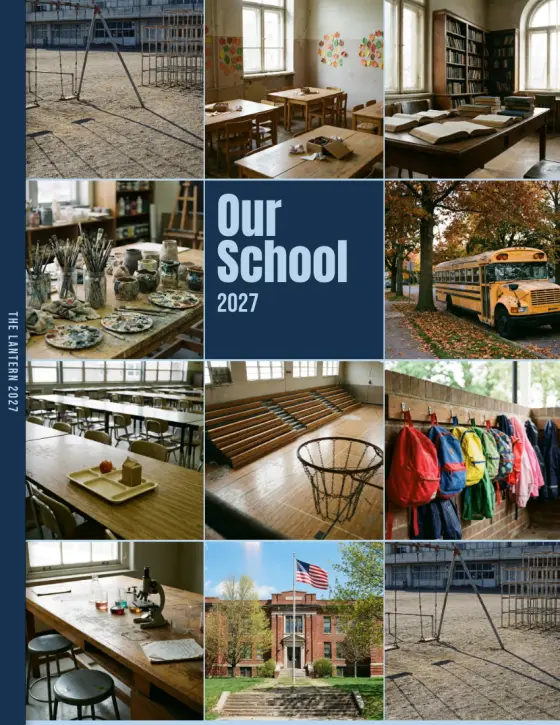
Places to visit suit a school that takes trips or has a strong mascot: under the sea, space, a museum, a zoo and a passport. Each grade becomes a stop along the way.
Things you make suit a book built from pupil artwork: blocks, a jigsaw, a toolbox, a recipe and a storybook. Each section adds a part and the closing shows the finished thing.
Things that grow or change show six years of school in one object: a garden, a weather chart, rainbow stripes, handprints and a board game path from first day to last.
Turn the theme into a cover
The front cover carries three things: the school name, the school year and one image. Keep them 13 mm (0.5 in) inside the trim so nothing is lost when the cover is cut and bound.
Scan pupil artwork at 300 pixels per inch or more. Marker, paint and cut paper reproduce well; pencil and pale crayon scan faintly and need going over in a darker medium.
A pupil cover-art contest can supply the cover and the dividers. Issue one paper size, allow three weeks, judge entries by number and not by name, and print runners-up on the back cover.
Carry it through the dividers
A divider is the page that opens a section. Give each grade a right-hand page or a full spread, with the grade name, the theme image for that grade and the page range that follows.
Change one thing per divider and hold the rest. In the garden the plant grows a stage; in the rainbow the stripe changes colour; the layout, type and position never move.
Repeat a small piece of the divider image beside the folio on every page of that section. A child then finds their grade by flicking for the fish, the block or the stripe.
Check the theme against the page plan
Count the dividers into the ladder before artwork starts. Eight single-page dividers add 8 pages and eight spreads add 16, which is one full printed signature.
Ask one adult to check every piece of pupil art for names, faces and anything copied from a film or a toy brand. Block and space themes attract logos, so brief the classes first.
In tbf scrapbook a yearbook takes one of eight styles, and scanned artwork goes onto its pages as photos. Dividers count towards the 12 to 100 shared pages you choose at setup.
Pages to make
Shortlist three themes
Pick ones every grade can draw and that split into six to eight parts.
Let the school choose
Put the shortlist to a class vote or the yearbook committee.
Run the cover-art contest
One paper size, three weeks, numbered entries, runners-up on the back.
Fix the divider plan
Assign one stage, colour or icon to each grade and add it to the ladder.
Questions
What is a good theme for an elementary yearbook?
A concrete object that every grade can draw and that divides into stages: a garden, a jigsaw, a rainbow of grade colours, a board game path or a passport with a stamp per grade.
Should pupils design the yearbook cover?
Yes, if the brief is tight. Run a contest with one paper size and numbered entries, use the winner on the front and place other entries on the back cover, endsheets and dividers.
Can I make this in tbf scrapbook?
Yes, on a paid plan, for 1 to 300 students and up to 300 pages. You pick one of eight styles and add scanned pupil art as photos. tbf does not draw a theme for you.
Sources
Before you finish
Plan the yearbook pages
Choose the number of students, their space and the shared pages in Studio. The total includes both covers and must be even, up to 300 pages.
A family book can use shared pages without individual student pages. Print limits depend on the binding you choose.