
Yearbook cover contest: rules, sizes, judging sheet
Hand out a rules sheet with the paper size, an empty title band and one deadline. Number the entries, hide the names, and have 3 to 5 judges score 4 criteria from 1 to 5.
A paid plan is required to create a yearbook. Printing is a separate order.
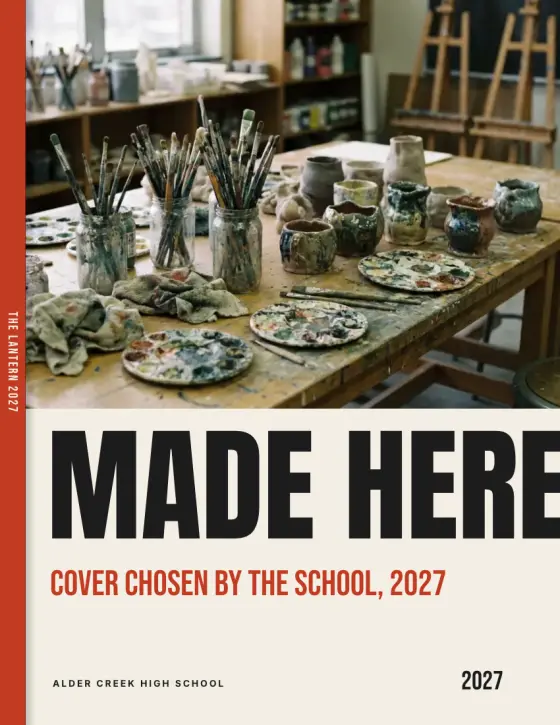
A cover contest asks pupils to draw the yearbook's front cover and prints one entry. It is mostly an elementary and middle school practice, run by the adviser or a parent group.
Most problems start on the rules sheet: art on the wrong shape of paper, a drawing where the title has to go, pale pencil that will not scan. Settle those before anyone draws.
See also: Divider pages, a home for the runners-up, Fit the contest into the year's deadlines, Trim, bleed and cover choices at the printer.
Start a yearbook
Choose a style, a page count and space for each student. Set up the yearbook and its cover online.
A paid plan is required to create a yearbook. Printing is a separate order. Plans and prices.
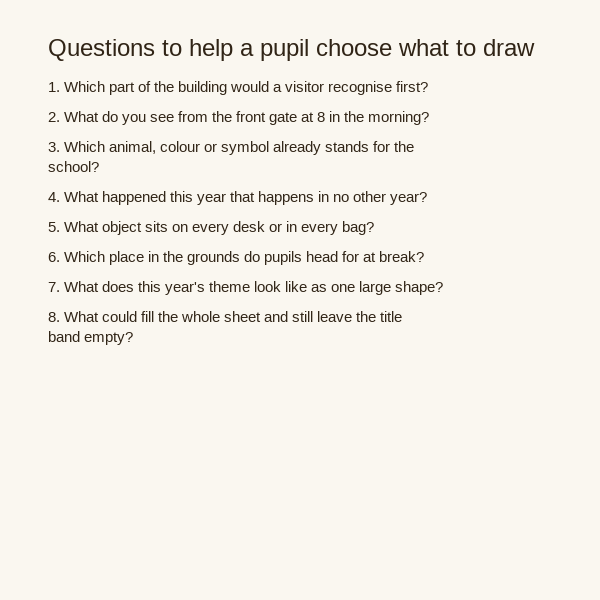
Questions to help a pupil choose what to draw
- Which part of the building would a visitor recognise first?
- What do you see from the front gate at 8 in the morning?
- Which animal, colour or symbol already stands for the school?
- What happened this year that happens in no other year?
- What object sits on every desk or in every bag?
- Which place in the grounds do pupils head for at break?
- What does this year's theme look like as one large shape?
- What could fill the whole sheet and still leave the title band empty?
| Criterion | What the judge looks for | Scores 1 | Scores 5 |
|---|---|---|---|
| Fits the theme | The drawing shows the stated theme or the school itself | No link to the theme | Theme clear with no explanation |
| Original idea | The pupil's own subject and drawing, nothing copied or traced | A copied character or logo | A subject no other entry used |
| Reads from a distance | Bold shapes and strong contrast seen from 3 metres (10 feet) | Detail lost, colours merge | Main shape clear across a room |
| Follows the rules | Right paper, right way round, clear margin, empty title band | Two or more rules broken | Every rule met |
| Total | Add the four scores for this entry number | Lowest possible: 4 | Highest possible: 20 |
Download this table as a spreadsheet (CSV)
Write the rules sheet first
Put every rule on one side of one sheet and staple a blank piece of the correct paper behind it. Pupils then draw at the right size without measuring anything.
State the theme if the book has one, and say who may enter: every grade, or the oldest grade only. The eight rules below fit on half a page in 12 point type.
- Paper: the size supplied, used the stated way round, portrait or landscape
- Margin: nothing that matters within 13 mm (half an inch) of any edge
- Title band: leave the marked area empty unless the sheet asks for lettering
- Medium: marker, paint, ink or firmly pressed coloured pencil; no glitter, neon or stuck-on objects
- Original work: no copied characters, logos or traced pictures
- Name: on the entry form and the back of the paper only, never on the front
- Condition: flat, unfolded and clean, handed in inside a folder
- Deadline: one date, one time and one hand-in place, with late entries not judged
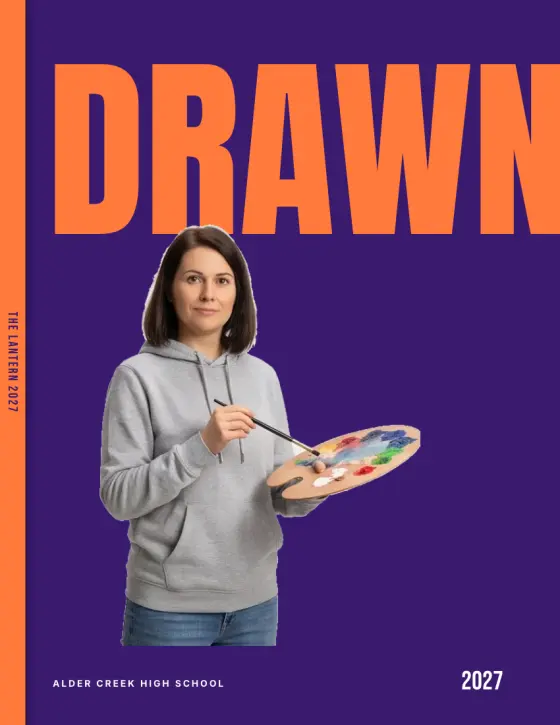
Match the artwork to the book's trim
The drawing has to be the same shape as the cover or it will be cropped. For an 8.5 by 11 inch book use US Letter paper upright. For an A4 portrait book use A4, 210 by 297 mm.
A 9 by 12 inch book is a little narrower in proportion than Letter, so a thin strip is cropped from the sides. For a 21 cm square book, cut A4 sheets down to 210 by 210 mm.
Mark a title band across the top quarter of the blank sheet, 74 mm deep on A4 or 2.75 inches on Letter. A cover is trimmed and a hardback wraps its boards, hence the margin rule.
What draws well and scans well
Dark outlines and solid areas of colour reproduce best. Pale pencil, light crayon and yellow on white fade in a scan, and glitter, metallic pen and neon ink do not print as they look.
Scan the shortlisted entries on a flatbed at 300 pixels per inch or more, at full size. A Letter sheet comes out at 2550 by 3300 pixels and an A4 sheet at 2480 by 3508.
A phone photo bends the edges and adds a shadow, so keep it for the thumbnail gallery. Store each original flat in its folder until the printed books have arrived.
Judge by number, not by name
One person who is not a judge logs each entry, writes a number on the back and covers the name. Judges see numbers only, and the key stays sealed until the scores are added.
Use 3 to 5 judges, for example an art teacher, the adviser and a pupil from a grade that cannot enter. Each scores 4 criteria from 1 to 5, so a judge can award 20 points.
Add the sheets and rank the totals. Break a tie on the score for reading from a distance, because a cover is seen across a room. Announce the winner and runners-up together.
Print the winner and use the runners-up
Collect a signed entry form with every drawing. On it a parent or guardian agrees that the art, the pupil's first name and the grade may be printed. No form, no judging.
Give the runners-up real space: the back cover as a grid of 4 to 9 drawings, one divider page each, or a spread showing every entry at thumbnail size beside its number.
A tbf scrapbook yearbook prints as A4 portrait, A4 landscape or a 21 cm square, so supply paper in that shape. The scan goes in as a photo, on the cover where the style has a photo space.
Pages to make
Ask for the cover deadline
A printer can want the cover well before the pages. Count back 5 weeks: 3 to draw, 1 to judge, 1 to scan.
Send the rules sheet and paper
One sheet of 8 rules, one entry form and one blank page of the right size per pupil.
Number and judge
Log entries by number, hide names, and have 3 to 5 judges fill in the sheet.
Scan and place
Scan the winner at 300 pixels per inch or more and give the runners-up the back cover or dividers.
Questions
What size should yearbook cover contest artwork be?
The same shape as the book. Use US Letter for an 8.5 by 11 inch book or A4 for an A4 book, held the same way round as the cover, with a 13 mm margin and an empty title band.
How do you judge a yearbook cover contest fairly?
Hide the names and judge by entry number. Give 3 to 5 judges the same sheet of 4 criteria scored 1 to 5, add the totals and settle ties on one criterion chosen in advance.
Can I use a contest winner as the cover in tbf scrapbook?
Yes. Scan the drawing and add it as a photo, on the cover where your style has a photo space. Yearbooks need a paid plan and print at A4 portrait, A4 landscape or 21 cm square.
Sources
Before you finish
Plan the yearbook pages
Choose the number of students, their space and the shared pages in Studio. The total includes both covers and must be even, up to 300 pages.
A family book can use shared pages without individual student pages. Print limits depend on the binding you choose.