
Yearbook ideas: sections and features to put in
Most yearbooks hold six sections: people, student life, academics, sports, clubs and reference. The ideas that get reread are the features between them: counts, polls and a day in the school.
A paid plan is required to create a yearbook. Printing is a separate order.
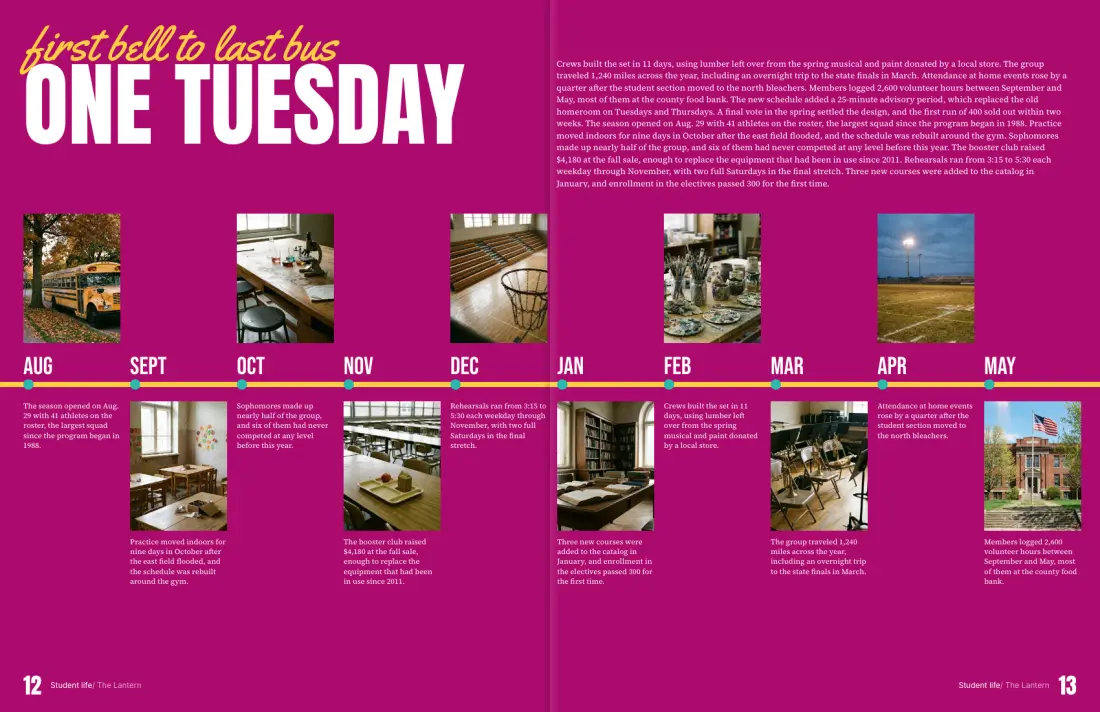
Start by listing what the group did this year, then fit it to sections. A yearbook planned from a list of pages tends to come out the same as last year.
The sections below come from the yearbook firms, and the features are for breaking them up. Every picture is a demonstration for an invented school.
See also: twelve yearbook themes, yearbook cover ideas, yearbook page layouts, yearbook superlatives, a kindergarten memory book, a senior year scrapbook.
Make a yearbook for a small group
Start a book, send the group a photo link, and pick what goes in. A class, club or family needs nothing more. Make a yearbook online.
A paid plan is required to create a yearbook. Printing is a separate order. Plans and prices.
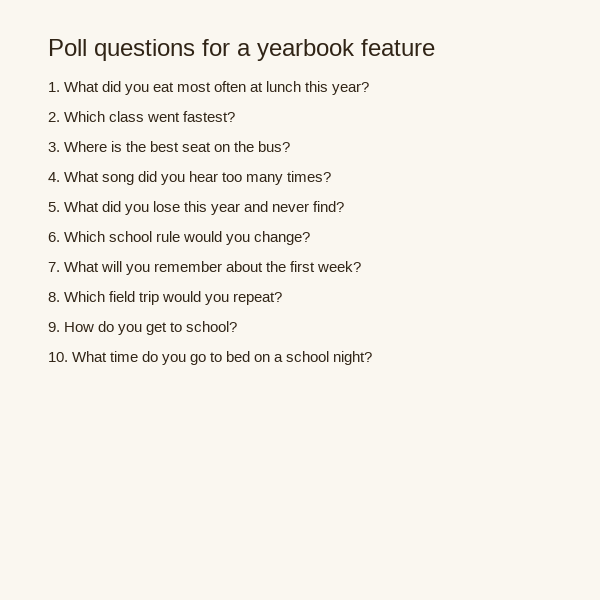
Poll questions for a yearbook feature
- What did you eat most often at lunch this year?
- Which class went fastest?
- Where is the best seat on the bus?
- What song did you hear too many times?
- What did you lose this year and never find?
- Which school rule would you change?
- What will you remember about the first week?
- Which field trip would you repeat?
- How do you get to school?
- What time do you go to bed on a school night?
| Group | Sections | A feature that suits it | Who supplies it |
|---|---|---|---|
| Preschool or kindergarten | Class photo, a page per child, field trips | Each child drawing the same thing in fall and in June | Teacher and parents |
| Elementary class | Class photo, projects, trips, field day | A map of the classroom drawn by the class | Teacher and a parent helper |
| Middle school club | Members, meetings, one big event | A count of everything the club made or lost | Two or three members |
| High school team | Roster, season results, away trips | A game-by-game strip with the score under each picture | Team manager and coach |
| Theater or band | Cast or section lists, rehearsals, the show | The program reproduced beside the backstage pictures | Stage manager or section leaders |
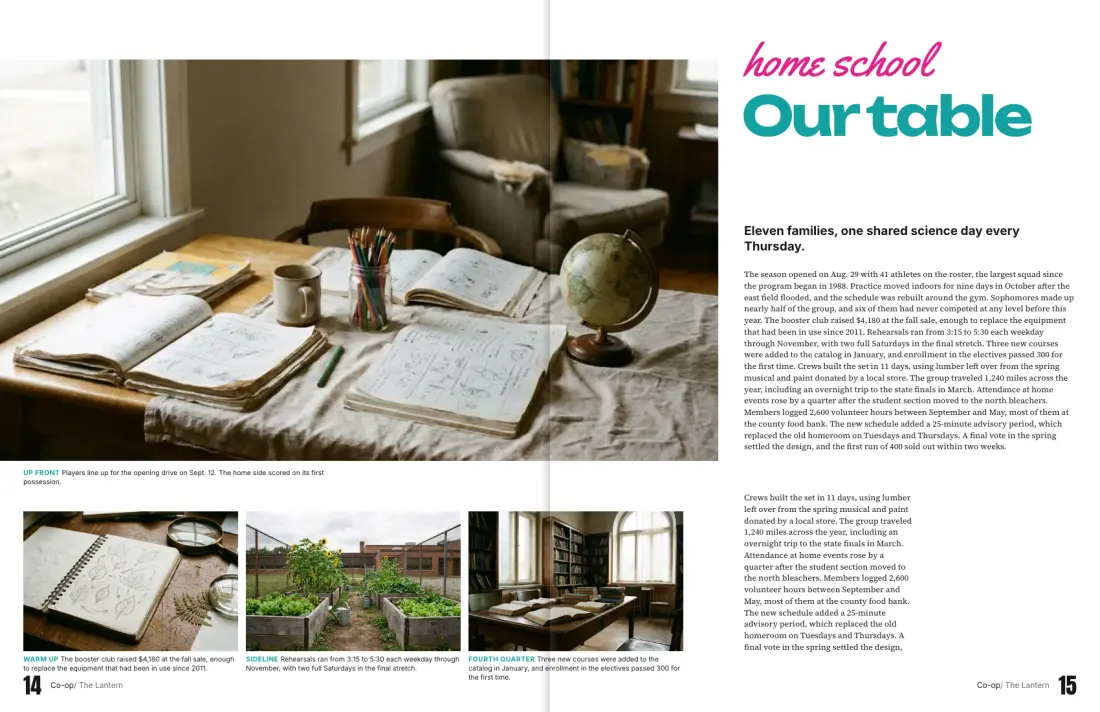
| Home-school group | Families, field days, shared classes | What each family studied, one page a family | One parent from each family |
| Scout troop or youth group | Members, camps, badges earned | A map of every place the troop slept | Leaders and older members |
| Family year | Months, trips, birthdays | The same doorstep photo at New Year | Every adult with a camera |
The six sections most yearbooks share
Treering, a US yearbook firm, sorts its page ideas under six headings. Use them as a skeleton and drop what your group does not do.
Give each section a page budget before you start. A small book can fold academics into student life and sports into clubs.
- People: portraits, staff, class lists
- Student life: dances, lunch, the parking lot, what people did on weekends
- Academics: one project per subject, not one photo per teacher
- Sports: results, rosters and the away trips
- Organizations: every club, however small
- Reference: index, group photos, ads and a colophon
Features that break up the sections
A feature is a small unit with its own shape, dropped into a spread. Walsworth calls a self-contained block of a set size a mod. Eight that repay the work, then eight more below.
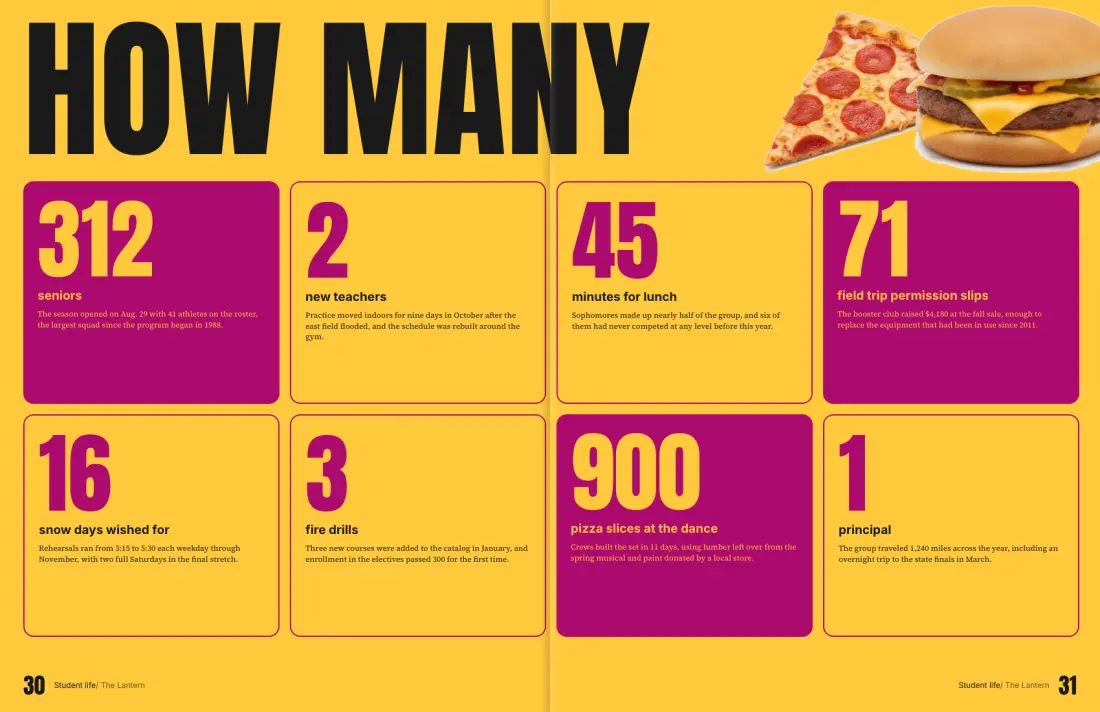
- By the numbers: lunches served, books borrowed, miles driven by the bus
- A day in the school, hour by hour
- A poll with results set as a chart
- Then and now pictures of the same room
- The year in the news, one line a month
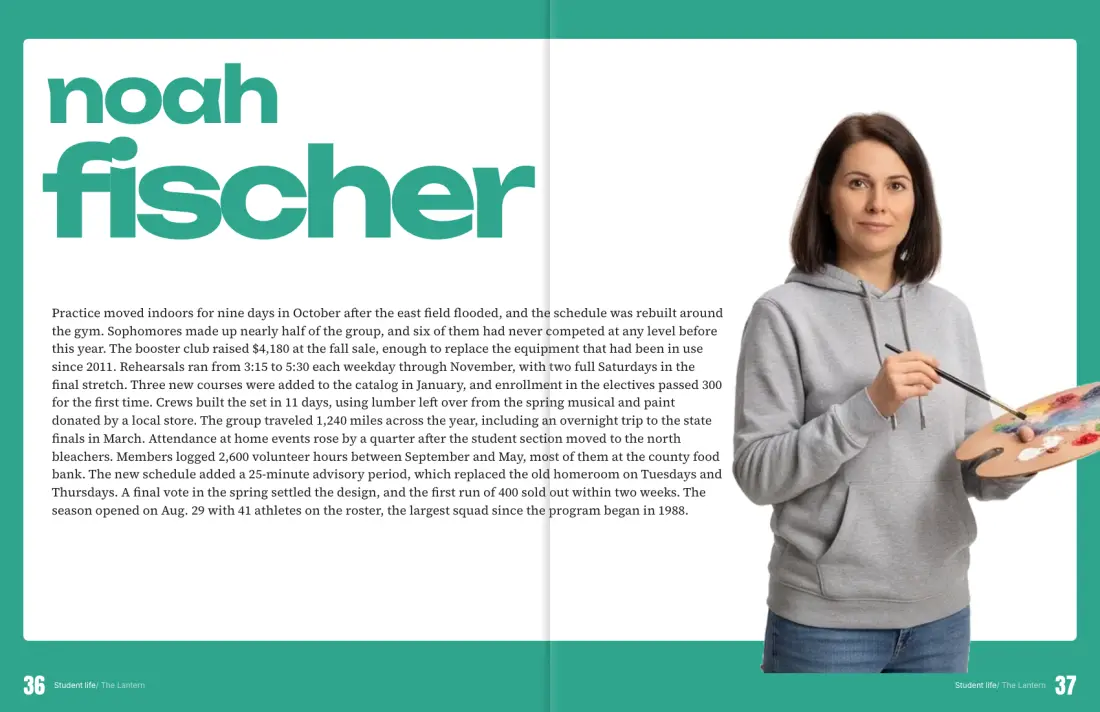
- A mini-mag: a magazine-style insert on one topic
- What people carried in their bags
- A map of where the year happened
Eight more for a small book
These cost little and need no photographer, which matters when one parent is making the whole thing.
- Handwriting: every child writes the date
- A height chart on the classroom door
- The lunch menu from one ordinary week
- Scans of the best worksheets, with permission
- The noticeboard, photographed once a month
- One page of everything the class grew or built
- The teacher at age ten, if they have a picture
- Blank signing pages, ruled, at the back
Features, drawn as yearbook pages
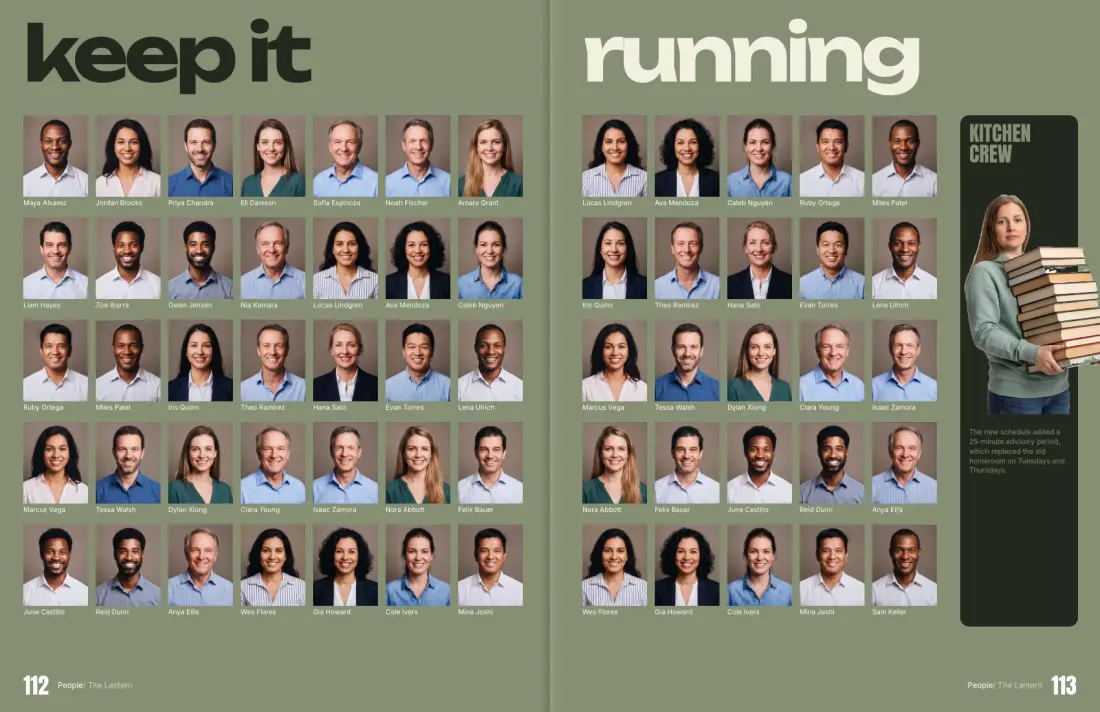
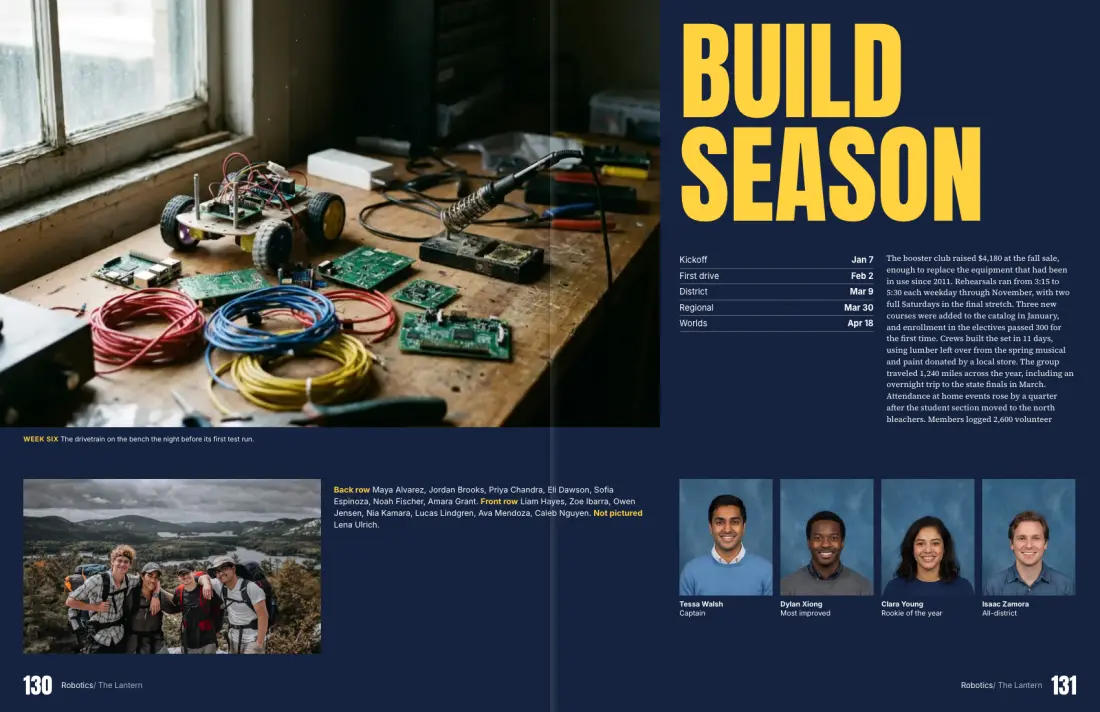
These six are drawn for this guide with generated faces and invented names. They show how a feature sits on a page, whatever you make it in.
In tbf scrapbook you start a book and let Arrange lay out your photos, then move what you like. A photo link lets members send pictures, and nothing goes in until you add it.
Who this suits, and who needs a yearbook firm
tbf scrapbook suits a class, a club, a home-school group or a family year: one person, or up to five editors on a paid plan. It is a scrapbook maker, not a yearbook plant.
A whole school should order from a yearbook firm. Firms import the picture-day files, match portraits to name lists, sell copies to each family and handle ads.
Check minimums if your group is small. Jostens says group yearbooks typically start at 50 books. Treering and Picaboo both advertise that a very small order is possible.
Whichever you use, add a colophon on the last page: who made it, the fonts, the printer and how many copies. Jostens and Walsworth both describe one, and it costs one small box.
Pages to make
Opening spread
Say which group and which year in one line, with one wide picture. Leave the people for the next pages.
A page for every person
The same frame size for each, in register order. A child who joined in March gets the same frame as everybody else.
A feature every few spreads
After each section, one spread that is not photos of people: a count, a poll, a map or a lunch menu.
Closing pages
Index if the book runs past 40 pages, the colophon, then blank ruled pages for signing.
Questions
What should be in a yearbook?
Portraits or a page per person, student life, academics, sports, clubs, and a reference section with an index. A small book can keep people, events and a closing page.
What can I do to make a yearbook different?
Add features that are not portraits: a poll, the year in counts, a day told by the hour, or the same room photographed in each season. They age better than posed groups.
Can a parent make a class yearbook?
Yes, with the teacher agreeing first. Ask the school which photos may be used and who may get a copy, then collect through one person so names are checked once.
Sources
Before you finish
Plan the yearbook pages
Choose the number of students, their space and the shared pages in Studio. The total includes both covers and must be even, up to 300 pages.
A family book can use shared pages without individual student pages. Print limits depend on the binding you choose.